ABC News Anchor Elizabeth Vargas on Her Long Battle With Alcohol and Her Road to Recovery

1505470_1280x720

The veteran ABC News network anchor sat down with Diane Sawyer for a special edition of ABC News “20/20” to talk for the first time about her long struggle with alcoholism and anxiety, and her recovery process.

In the interview and in her new book, “Between Breaths: A Memoir of Panic and Addiction,” Vargas shares that she suffered repeated relapses, was almost fired from ABC News and that her marriage to singer-songwriter, Marc Cohn, ended in no small part because of her drinking.

Vargas, 54, who says she hit rock bottom two years ago, knows it’s an act of grace that she’s alive today. There was one occasion, she said, when her blood alcohol level was at .4 – a lethal amount.

“And even that didn’t scare me into stopping,” Vargas said.

I Lost Sight of Everything

“When you’re in the cycle of this disease though, it doesn’t matter how much you have or how little you have, I—it didn’t matter,” she continued. “It leveled me. It knocked me flat on my butt. I lost sight of everything.”

53315_2_12 -- ABC News--20/20 co-anchor, Elizabeth Vargas (CREDIT: ABC/Steve Fenn)

Throughout her 30-year career, Vargas has been known for her strong reporting around the world, her tough interviews and her steadiness during breaking news live coverage. On Sept. 11, 2001, it was Vargas who took over the breaking news coverage from ABC News anchor Peter Jennings.

In addition to “20/20,” Vargas has also been a frequent co-host on “Good Morning America.”

In 2016 alone, Vargas anchored breaking news coverage of the Orlando nightclub shooting, the shooting ambush in Dallas, the death of pop star Prince and the passing of boxing icon Muhammad Ali.

For years, Vargas says she drank socially, like anyone else, and was able to control it until she hit rock bottom.

When you’re in the Death Spin

“There are days when you wake up and you feel so horrible that the only thing that will make you feel better is more alcohol,” she said. “That’s when you’re in the death spin.”

This year, more than 30 million Americans are locked into a battle with alcohol, according to the National Institute on Alcohol Abuse and Alcoholism (NIAAA), an arm of the National Institutes of Health.

The hardest part, Vargas said, was knowing that her alcoholism affected her two sons, Zachary, 13, and Sam, 10.

article-2727544-209afb3e00000578-759_634x658“I don’t know if I will ever forgive myself for hurting them with my drinking, ever,” she said. Vargas says she never physically endangered her kids with her drinking and never drove under the influence.

“But let me just say something,” she said. “Because I didn’t physically endanger my children doesn’t mean I didn’t devastate them or put them in danger emotionally or psychologically.”

Vargas grew up in a military family and moved to 14 homes, nine Army bases and eight schools as a child. When she was little, she said she suffered from anxiety daily, even panic attacks, but she learned to hide them. Her struggle with that crushing insecurity continued when she started out as a local reporter out West.

1408324674000-vargas“Because I am basically so insecure and anxious and afraid I never, ever, in my life learned to reach out for help, ever,” Vargas said.

Studies show that nearly 63 percent of women in trouble with alcohol say they are also fighting anxiety. But when she was starting out, Vargas said she didn’t understand then that the disease of alcoholism could slowly take over and threaten her life.

“There’s a real temptation… to whitewash what you did, ‘It wasn’t as bad as everybody says,’ or ‘it wasn’t as bad as I remember,’” Vargas said. “And for better or for worse, I have recordings of myself on TV and audio recordings that remind me how bad it was.”

Vargas said her drinking began after she got her first job and the news team would head out to the local bar after work.

“It was like, ‘I finally feel relaxed,’” Vargas said. “All my insecurities would sort of fade back.”

She finally found someone to confide in about her insecurities when she married Marc Cohn, best known for his song, “Walking in Memphis,” in 2002. She said he used to calm her by singing her to sleep. But even before they were married, Vargas said he noticed her drinking at night.

rs_600x600-140314062006-600-elizabeth-vargas-marc-cohn-jr-31414“He thought I drank too much,” she said. “I remember he was angry when he said it, and grabbing my arm and saying, ‘You have a problem with alcohol,’ and that just made me really mad.”

She said his words got her attention and for several years, she did control her drinking. She gave birth to their two sons and was caring for them while continuing to work – once even through a miscarriage.

After Peter Jennings died from complications of lung cancer on Aug. 7, 2005, Vargas and ABC’s Bob Woodruff were named co-anchors of “World News Tonight.” But 27 days later, Woodruff was severely wounded by an IED in Iraq.

I Felt Like I was in a Hurricane of Life

“It was devastating. Devastating to everybody who worked there,” Vargas said. “I felt like I was in a hurricane of life.”

Four months later, she was replaced by senior anchor Charlie Gibson.

“I was demoted,” she said. “No sugarcoating it.” The self-doubt mixed with anger and fear came roaring in.

By 2009, Vargas said she felt her husband pulling away. She grew resentful, the exhaustion of all that travel while she was still trying to be a good mom and being the big financial responsibility for the family, and she said wine became her consolation. Eventually, she said she began keeping the amount she was drinking a secret.

“I would stop on my way home work, you know, and have a glass of wine or two at a bar,” Vargas said. “Alone, feeling really pathetic, you know I would actually pretend to talk to someone on my phone.”

When she would head home, she said she would pop a couple of Altoids and hope that she wasn’t “breathing white wine fumes” when she greeted the kids.

She Didn’t Think She Had a Drinking Problem

But like millions of other people, Vargas said she didn’t think she had a drinking problem because she didn’t drink all the time and she had no family history of alcoholism. As time went on, she said her glasses of wine at night became entire bottles and her husband noticed.

“It made all the real problems we needed to discuss and work through frivolous in comparison,” Vargas said. “You know, ’What do you want to talk about? Why don’t you ask me about how my day is?’ Or ‘Why don’t you support me more?’ when ‘why are you drinking two bottles of chardonnay every night?’ You know? I’ve just gone and changed the narrative in a pretty dramatic and destructive way.”

At one point Vargas said she even hid bottles of wine under her bathroom sink.

“Looking at myself in the mirror thinking, ‘This is who I am, sneaking into my own bathroom to gulp down from my toothpaste cup a half cup of wine so I can get through another hour feeling good,’” she said.

She Fell into a Pattern of Secret Drinking

She said she fell into a pattern of secret drinking and then rewarding herself by binging on vacation. Her sister Aimie Vargas had no idea how much she was drinking until they took a trip together with their kids in summer 2011.

“It was in the middle of the afternoon and she was drunk,” Aimie Vargas said. “She told me that she drank too much because she was so unhappy.”

When Aimie tried to intervene, Elizabeth said she wasn’t an alcoholic, just having a rough time. Then a year later, in 2012, she was on another family vacation with Marc and the boys in Florida.

“That was our big vacation and my idea of a vacation was to empty the minibar by drinking everything in it,” Vargas said.

But, I Couldn’t Stop Drinking for my Children

“I wouldn’t give a nanosecond’s worth of thought to die for my children, to kill for my children,” she continued. “But I couldn’t stop drinking for my children.”

After that 2012 Florida vacation, Vargas decided to make a secret visit to her first rehab facility, telling her ABC News bosses she had a medical issue. The minimum stay at these facilities is usually 30 days, but Vargas said she was “so deluded and in denial” that she convinced the rehab facility to let her come for just two weeks.

Doctors say heavy drinking over time can change the structure of the brain and the cells in your body. The chemical receptors start to demand more alcohol to feel normal and that the first three months of attempted sobriety are the most dangerous for relapse.

A few weeks after she left rehab, Vargas said she started drinking again. She was never drinking on live TV at ABC News, but there were rare occasions when she would drink before interviews and it affected her performance. Vargas said she drank to calm her nerves, but one instance led to a terrifying blackout.

“There was one occasion on a Saturday,” she said. “I woke up that morning and I was feeling horrible, that shaky, horrible, fluttery heart… and I was on my way to the shoot on Columbus Avenue [in New York City] and I saw a liquor store.”

On her way to the interview, Vargas said she had the car stop, she bought wine and drank some of the bottle before she started taping. Afterwards, Vargas said she slipped into a nearby room and drank again. When she got in the car to be driven home, she said the last thing she remembers is fastening her seatbelt. Her next memory was waking up in the emergency room.

“I don’t know where I went. I don’t know what I did. I don’t know what I drank,” Vargas said. “I drank enough to be at a lethal blood alcohol level.”

Since that day, Vargas has pieced together what happened. She now knows she wandered by Riverside Park in New York City and a stranger driving by saw her and stopped to help.

“I was able to tell her my address,” Vargas said. “She said she saw some men nearby that she didn’t like the look of who might have been, at that point, probably seeing me as a vulnerable person and she brought me back home. And, at that point, I was apparently unconscious.”

Her husband called 911 while their kids remained upstairs unaware that their mother was unconscious in the lobby of their apartment building.

After her near-lethal blackout in 2012, Vargas told the president of ABC News that she needed time off to confront her addiction.

“I was too embarrassed to tell him that it was just alcohol because I thought it was so unfeminine, like, to be a drunk,” she said. “Even now, I have a hard time saying that word so I told him alcohol and Ambien.”

With the support of ABC, Vargas went to rehab for a full month.

At least 2,300 Americans die every year from alcohol poisoning, according to the Centers for Disease Control, though some experts believe that number is underreported.

On average, an alcoholic will take three to four attempts to get sober for good. After spending that full month in rehab it was not long before Vargas was drinking again.

“It only took me six months, seven months later before I was back to looking at myself in that bathroom mirror wondering, ‘how did I get here,’” she said.

Vargas said her parents, her sister and her brother all took time to try to help her.

You Sort of are Standing by Watching a Train Wreck

“You sort of are standing by watching a train wreck. It was awful,” her sister Aimie Vargas said. “You just want to shake her and say, ‘Why are you doing this to yourself?’”

After this, Elizabeth went to a different rehab facility for a month, but after a few days at home, she went back again after her brother Chris Vargas flew in from California to take her.

“I walked into her apartment and she was completely out it,” Chris Vargas said. “It had been 7:30 in the morning, a couple of empty wine bottles beside her bed… I remember wanting to tell her, ‘Look, you can walk into a room and you can light up that room, but don’t show up drunk.’”

In 2014, Vargas was forced to go public with her alcoholism after it was leaked to the press. She sat down for an interview with ABC News’ George Stephanopoulos. That same year, her husband came to her and said he wanted a divorce. ABC also put her on notice to stay sober or lose her job.

That summer Vargas decided to take the kids on a vacation and rented a beach house in California, taking someone to help with the kids full-time.

“I drank again and I ruined it,” she said.

While in California, Vargas said she started with wine and then a bottle of tequila. But she got word that ABC needed to record her voice for a report to air the next day. When a crew arrived at 8am to tape her, Vargas said she was still drunk.

“I remember that day, sitting there, and I could read the words and I couldn’t make my mouth work to say the words,” she said.

Vargas said she feels sick to her stomach when she listens to that tape and other recordings of her where she had been drinking.

“But I’m glad I listened to it, because I never want to be there again,” she said.

25555188Her bosses at ABC were alerted that she was drinking again, and she called her sister to say she was in trouble.

I Need Help

“It was the first time that she called and said, ‘I need help,’ and I’ll never forget that,” Aimie Vargas said. “It’s still really hard to talk about because I think I instantly knew, ‘This is bad.’”

Aimie said she dropped everything and flew to California to be with her sister. Elizabeth also called an ABC colleague who knew an actor/director in the area who was also a recovering alcoholic. He raced over, along with Vargas’ siblings, to comfort her two sons as she went into detox.

“I honestly thought it was all over,” Aimie Vargas said. “I thought she was going to lose the boys, and I thought she was going to lose her job. We all did.”

Embarrassed, ashamed and deeply humbled, Elizabeth Vargas said she decided to get help and fight to stay sober. A counselor flew with her back to New York. The first thing the counselor had her do was make a calendar of all the days she was drunk and what it did to those around her. Vargas said that’s what forced her to stop living in denial.

Vargas told her ABC bosses that she had finally grasped how important it was to surround herself with constant, daily help.

Vargas went to a sober house where they tested her blood for alcohol and ABC News agreed to give her unpaid time off to deal with the addiction and its underlying causes, and one more chance to prove she could stay sober.

Thank God They Gave Me One More Chance

“Thank God they gave me one more chance,” Vargas said. “Thank God, because, you know, many other employers wouldn’t have.”

She went back to work again, sober and grateful, and apologized to the colleagues who had to redo her work because of her drinking.

The hardest of all, Vargas said, was she forced herself to confront what she had done to her children and apologized to them for the pain she caused them.

I’m Sorry, I’m So Sorry

“You can’t just say, ‘I’m sorry, I’m sorry I hurt you,’ and then, you know, leave it at that,” she said. “’I’m sorry I drank. I’m sorry I scared you. I’m sorry that I wasn’t there for you. I’m sorry I fell asleep and missed your recital. I’m sorry. I’m so sorry.’”

After their divorce, Vargas and her husband Marc Cohn agreed to joint custody of their sons.

In a statement, Cohn told “20/20,” “Elizabeth has always had, and will always have my support, especially in regards to her recovery. I have tried my best to protect our family during the course of this very complex and challenging journey, and that has included honoring Elizabeth’s privacy.

Now I applaud her efforts to shed some light on the link between anxiety and alcoholism, which I imagine will help countless numbers of people and families. As for our own family, we continue to be loving parents to our two incredible boys and I’m extremely grateful that we work well together in putting their needs front and center.”

Vargas has hope for the future. She has learned that if she ever feels tempted to drink, she has to leave and she makes time for meditation. She said anger is still a trigger for her to want to drink, but now she reaches for the phone and calls someone immediately if she feels those feelings coming on.

Most of all she said she hopes her children know she fought to pull herself out of the abyss for them.

In addition to sitting down with Diane Sawyer, Elizabeth Vargas also spoke to ABC’s Dan Harris for his “10% Happier” podcast about her struggle and her new book. Listen to her full interview with Dan on iTunes, Google Play Music and TuneIn.


51qruckrdhl-_sx329_bo1204203200_

I have always been a great fan of Elizabeth Vargas and often wondered why she was not selected to co-anchor the Good Morning America show after Diane Sawyer left…now, we know why. To me, she always exuded elegance, confidence, beauty…an incredible reporter, and, I can go on and on…what a gift for her to share her experience with us. As we go through the many challenges in life, how important it is to know we are not alone and let us use Elizabeth Vargas’ example to share our struggles and help other people in the process. Her new book “Between Breaths: A Memoir of Panic and Addiction” is now available…share it with anyone you know going through this challenge. Thank you Elizabeth Vargas for showing us the Power of an Unbreakable Spirit.


Excerpt written by Sean Donley, Margaret Dawson and Lauren Effron
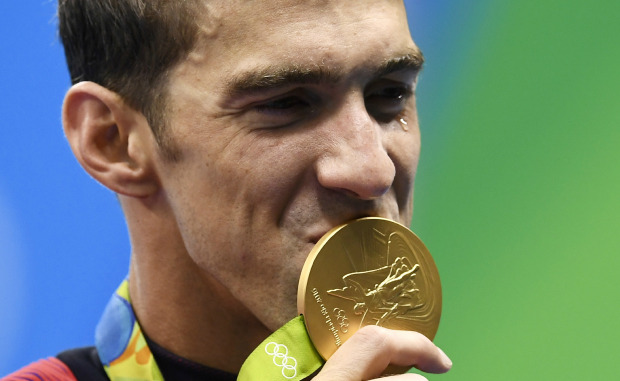
Michael Phelps…The Greatest Swimmer of All Time….The most Decorated Olympian…The Greatest Athlete ever!

Michael-Phelps3In his final race before retirement, the most decorated Olympian in history led the U.S. to victory in the 400-meter medley relay at the Olympic Aquatics Stadium in Rio.

Phelps finished a career that spanned five Olympics with 28 medals, 23 of them gold. No other athlete in any sport has more than nine gold medals. Even Michael Phelps couldn’t imagine an ending this good.

Speaking after that final success, an emotional Phelps said: “It’s tough to put into words right now, but, I finished my career how I wanted to. Through the ups and downs of my career, I’ve still been able to do everything that I’ve ever wanted to accomplish. I’ve been able to do things that no-one else has ever been able to do.”

110316MichaelPhelpsRoadtoRiothumbnail

I have a special affection for Michael Phelps. It’s not just that he is a great athlete with an incredible passion for what he does and a prime example of the Power of an Unbreakable Spirit but, he is my nephew Jeff Gross’ best friend. They know each other from Ann Arbor, MI and were roommates in Baltimore, MD. Jeff is an internationally known professional poker player and another example of passion and success in his profession.

Jeff twittered: So, how do we think our flag bearer did in his 5th and final  Olympics? Jeff is on the right in this picture.

Cp2WbEFVMAAmNuo

The Road to Rio was not easy at all

What fascinates me is the other side of Michael Phelp’s journey from 2012 to the 2016 Rio Olympics…Depression, Rehab and becoming a father. Michael Phelps has battled depression, a suspended jail sentence and drinking issues. His road to the 2016 Rio Olympics was not easy at all.

“He had no idea what to do with the rest of his life. It made me feel terrible. I remember one day I said: ‘Michael, you have all the money that anybody your age could ever want or need; you have a profound influence in the world; you have free time — and you’re the most miserable person I know. What’s up with that?”

The New York Times revealed that these strong words were spoken into the face of Michael Phelps by his long-time coach and second father Bob Bowman towards the end of 2014, a year that shaped the course of his life and shook him completely due to incidents he is never likely to forget.

469818382-1470876124-800Phelps and his coach Bob Bowman, who has been with him since he was 11

We are so immersed in the ‘action’ aspect of things that we lose track of what athletes have actually suffered or sacrificed to realize their dreams. While we might have seen the perfect side of Michael Phelps every four years since 2004, the swimmer has battled imperfections, demons, sadness, depression and a mental death to get there.

Phelps, who had previously announced that he would not be swimming anymore after London, chose to come back from retirement in 2014. But it did not begin well, as he failed to win any of the finals at the 2014 US Summer Championships. However, this was not the low that hit him the worst. In September 2014, history repeated itself as Phelps was arrested for DUI (Driving Under Influence), as a result of which he was suspended from US Swimming for half a year. The alcohol, reckless company and cluelessness had sent Phelps into an oblivion from which he did not want to return.

A startling admission to Today saw the swimmer actually describe the kind of mental space he was in at the time of his arrest. “I was at the lowest place I’ve ever been. Honestly, I sort of at one point, felt like I didn’t want to see another day, I felt like it should be over,” he said.

Quite a startling and shocking admission by a man who, as compared to the regular Joe, has everything there can be had by a human being on earth. However, sometimes it is not about what you have but about how you feel, and Phelps realized that he had become a robot who had grown out of love.

All those weekends and holidays he had missed as a teenager to become the greatest Olympic swimmer of all time, the toll of his parents’ divorce, the lack of any sort of friends and his achievements becoming a burden, converged into one big mess in his brain.

Going to rehab and finding himself

The DUI incident propelled Phelps to check into a rehab in Arizona called the Meadows. Little did Phelps know that the six weeks he was going to spend there would alter the course of his life forever. The three fortnights at the rehab, according to him, were in hindsight the part of a journey of self-discovery.

Phelps found his real self and in the process, got back the indispensable parts of life he had chucked out. He got back in touch with his father, whom he had not spoken to since 2004, and that, literally, stopped his nightmares and brought him peaceful sleep.

Along with getting back his family, Phelps also decided to commit to his girlfriend Nicole Johnson, who became his fiancée in early 2015. With his personal life settled, Phelps decided to return to the love he had fallen out with – swimming.

Training hard like he had done when he was a teenager, Phelps got his mojo back and won big at the 2015 Winter National Championships. He celebrated those wins in a manner that reflected redemption was on its way.

13534477_1001986193247360_1768389377_n

Things kept getting better for Phelps from thereon as he welcomed his first baby, Boomer, in May 2016. He celebrated that in style – by qualifying for the Olympics – and became the first athlete to represent the US Swimming Team in five editions. Speaking to Sports Illustrated in late 2015, Phelps had said, “The performances were there because I worked, recovered, slept and took care of myself more than I ever had. I’m back to being the little kid who once said anything is possible. You’re going to see a different me than you saw in any of the other Olympics.”

Success, happiness and the drive to keep going

587854440-1470876311-800-1Phelps is a much happier man now

Not only is he a different man at the 2016 Rio Olympics, but Phelps looks much happier than in 2012. He seems content and in the zone, which we saw in 2004 and 2008.

It is quite incredible the amount of intensity, work, preparation and determination that need to be put in by a man like Michael Phelps, even after winning 18 Olympic gold medals. You sometimes shudder to think, why does he need to do that? Can’t he enjoy his life like regular famous people, by appearing on magazine covers, partying and being loved by fans?

The answer is the exact reason why he is Michael Phelps and has won more medals than many nations have combined to win in their Olympic history. He exists at a level where the ordinary person cannot even reach in his/her imagination. The immediate irony, despite his exceptional existence, is that his problems are like those of regular people and involve drinking-driving, break-ups and separation from parents. Phelps, like all of us, has felt mechanical at some point in his life – the only difference being that his boredom came after winning 18 Olympic gold medals.

Everyone has a story…even Michael Phelps…it’s not what happens, it’s what we do about it that shapes our destiny. Bravo Michael for being such an inspiration and a shining example of the Power of an Unbreakable Spirit. We are proud of you!

(excerpt by Vikram Mahendra’s article in Sportkeeda…Depression, rehab and becoming a father: The other side of Michael Phelps’ journey from 2012 to 2016 Rio Olympics)

“The greatest Father’s Day gifts are gratitude and forgiveness.” — Dr. Wayne Dyer

WhatYouConceive

Dr. Wayne Dyer is affectionately called the “father of motivation” by his fans. Despite his childhood spent in orphanages and foster homes, Dr. Dyer has overcome many obstacles to make his dreams come true. Today he spends much of his time showing others how to do the same. His main message is that it is possible for every person to live an extraordinary life. What’s more, it is possible for every person to manifest their deepest desires — if they honor their inner divinity and consciously choose to live from their “Highest Self.”

WAYNE W. DYER is an internationally renowned author and speaker in the fields of self-development and spiritual growth. He’s the author of over 40 books, including 20 New York Times bestsellers. He has created many audio and video programs, and has appeared on thousands of television and radio shows.  He also has 10 PBS Specials which have raised over $250 million dollars for public television.

His books Manifest Your Destiny, Wisdom of the Ages, There’s a Spiritual Solution to Every Problem, and the New York Times bestsellers 10 Secrets for Success and Inner Peace, The Power of Intention, Inspiration, Change Your Thoughts—Change Your Life, Excuses Begone!Wishes Fulfilled, and I Can See Clearly Now have all been featured as National Public Television specials.

The following was taken from Wayne’s Weekly Wisdom

“The greatest Father’s Day gifts are gratitude and forgiveness.”

Dear Friend,

Father’s Day is coming this weekend and I’m looking forward to celebrating, as I always do, the great joy of being a dad. I joke that this holiday is my kids’ favorite because of the way I honor the occasion by writing each of them a thank-you letter and a generous check. This is simply my way of letting them know how much I appreciate the pleasure and privilege of being their dad. I have eight children, with ages spanning more than 20 years. They have been powerful and important teachers in my life, always keeping me humble and grounded. Over the years, they have given me some of my greatest material. If you have ever been to one of my speaking engagements (or seen my specials on public television), you’ve heard my stories about them and seen one or more of them on stage with me.

Last year right after Father’s Day, my daughter Serena introduced her first book, Don’t Die With Your Music Still in You. After so many years of getting great stories from my kids, the tables are turned and Serena used her book to share what she learned from the experience of having me as her dad. I get to have my say, too, as Serena’s stories are followed by my take on the lessons learned. One lesson I always tried to teach my kids was to have faith in themselves. I wanted them to know that they are extraordinary—unstoppable, powerful, and able to achieve anything they set their hearts on.

dyer-larger

My experience with my own father was very different from the life I’ve built with my children. I never met my father, but I did have an experience at his grave site that completely transformed my life. At age 34, I finally had a chance to release my intolerable burden of anger against the man who abandoned my mother, my two brothers, and me when I was just a baby. For all those years, I couldn’t wrap my head around the idea of a father who could be so uncaring. The story of my experience when I discovered the location of his grave in Biloxi, Mississippi and paid him a visit is told in detail in my book, I Can See Clearly Now, and also dramatized in the Hay House film, My Greatest Teacher. With Divine help, I was guided to Biloxi and given the marvelous gift of not only forgiving my dad, but feeling true gratitude for his role in my life. I believe I came to this world to teach self-reliance and I could not have had better training than the need to take care of myself and my family from the very beginning. I learned to find my way on the path I was meant to take, and since then I’ve been blessed with the privilege of helping others do the same.

When I forgave my absentee father, I set myself free to live a life of ever-expanding joy, compassion, and abundance. The destructive energy I had been wasting on hatred and anger was freed up to flow into healing creative work—writing, speaking, teaching, and building the life of my dreams.

I share more about my experience and many other lessons in my free video series. Many of my experiences have taught me the importance of listening to that inner calling, the power of forgiving those who have hurt us, and my true life’s purpose. I invite you to watch this series to discover and live from that deepest part of you – the divine light.

Today, I thank both my parents for the gifts they gave me. And I thank my kids for another year of making me smile, warming my heart, and reminding me that the love we share is our greatest blessing.

Happy Father’s Day!

I AM LIGHT


She Was Called The ‘World’s Ugliest Woman’ — She Proved Them Wrong — Lizzie Velásquez

If You Don’t Know Lizzie Velásquez, You Should…

image

How would you react if one day you went on YouTube, clicked on a video titled “The World’s Ugliest Woman,” and saw your own face staring back at you?

Become one of the Most Inspiring Individuals

If you’re Lizzie Velásquez, you take those negative comments to fuel your own ambition and become one of the most inspiring individuals online. Velásquez suffers from a rare condition which impacts her vision, immune system, and body. She cannot gain any weight — meaning at 26, she only weighs 58 pounds.

“When I was born, the doctors said we just want to warn you, expect your daughter to never be able to talk, walk crawl, think, or anything by herself,” Velásquez said in a TED talk early last year. Today, she is an author, motivational speaker, and inspiration to victims of bullying everywhere.  So much so that she’s started her own YouTube channel, with over 350,000 subscribers, all who consider themselves her friends and allies.

Velásquez has a condition that is so rare that only two other people are known to have it. She has zero percent body fat and has never weighed more than 64 pounds. Although Velásquez does not have anorexia nervosa, she is unable to gain weight and is required to eat many small meals and snacks throughout the day. Her daily energy intake of about 5,000 calories compares with the US average of 3,770 calories.[She is blind in her right eye, which began to cloud over when she was four years of age, and has limited vision in the other. She has a weak immune system. Her condition is similar to many other conditions, especially progeria. However, her condition is not terminall. Involved medical researchers at the University of Texas Southwestern Medical Center have expressed the opinion that it may be a form of neonatal proeroid syndrome, which at least has spared her healthy bones, organs, and teeth.

Appearance and Message

She has some progeroid physical characteristics, such as a pointed nose and already aging skin, but she has additional problems beyond that diagnostic classification. Ever since she was dubbed the “world’s ugliest woman” by cyberbullies in a video posted on YouTube, Lizzie Velásquez has spoken out against bullying.

Publications

Her first published work was co-authored (with her mother Rita) and is a self-published autobiography released in 2010 in English and Spanish It is called Lizzie Beautiful: The Lizzie Velásquez Story and has never-before-seen journal entries Lizzie’s mother wrote to Lizzie as a child.

94507dec9567316a6a99a129ff4b29f7

Next Lizzie wrote two inspirational books for teenagers, which share personal stories from her life and offer helpful advice. Be Beautiful, Be You (2012) shares Lizzie’s journey to discover what truly makes us beautiful, and teaches readers to recognize their unique gifts and blessings. That book is also available in Spanish as Sé bella, sé tú misma (2013). Choosing Happiness (2014) talks about some of the obstacles Lizzie has faced in her life, and how she’s learned the importance of choosing to be happy when it’s all too easy to give up.

“Am I going to let the people who called me a monster define me?

“Am I going to let the people who called me a monster define me? Am I going to let the people who said ‘Kill it with fire’ define me?” she said. “No. I’m going to let my goals and my success and my accomplishments be the things that define me. Not my outer appearance.”

01LizzieVelasquez

Her defiance of those comments — paired with her positivity — fueled her into becoming the inspirational leader she is today. Now, Velásquez is the star of the documentary, A Brave Heart, which tells her story of  bullying, her emotional journey towards self-acceptance, her rise as a motivational speaker, and her efforts lobbying for a federal anti-bullying bill. “All I know is being knocked down and getting back up,” she says in the trailer. “I’m not going to go away until they listen.”

written by Jessica Chou, Refinery 29, April 14, 2015

Lois Huyghue — Put One Foot in Front of the Other. Repeat

10407718_10203187667157422_5051320649383402479_n

I have a lot of Inner Strength…I am Tough as Nails

I first met Lois at Amir Academy of Marital Arts where we were both in the same class. I am in pain and full of excuses of why I can’t keep up…I’m too old, I’m not in shape, I can’t do this and here’s Lois, who had a stroke as a child and her left arm and leg are partially paralyzed…She’s a lean, mean machine…Lois says, “I have a lot of inner strength…I am tough as nails. The one thing I would say is never let age, limitations stop you from doing what you want.” Thank you Lois for being YOU and being such an inspiration to us in all of life’s challenges.

This article was written by John Pendygraft of the Tampa Bay Times on February 1, 2015.

Lois Huyghue, who hates cold like cats hate getting wet, pulled into Coachman Park to run a marathon. At 5 a.m., it was 36 degrees. Wearing two coats, three T-shirts and two hats, she peered out of her car window at a park full of skinny people in shorts and tank tops.

None of them looked scared, or cold.

“Who would know if I just started the car and went back to bed?” she thought.

Two months earlier, Huyghue, 55, had been watching the New York City Marathon on her couch in Clearwater. “These African women were running, and I saw how much energy they had and how they were so happy just running. I said to myself, ‘Oh, Lois, you have energy, why don’t you do that?’ ”

Huyghue looks a bit like those marathon runners. She is long and lean, with almost no body fat. She has always been active — hyper, really — and channels her energy into Zumba classes and martial arts.

39714_1400644141036_4853451_n

Mind you, a childhood stroke left her struggling to control her left leg and arm. She gets spasms. Those limbs move outside her control, have little muscle tone and can lock up at any time.

She had never trained as a runner, didn’t own a pair of proper running shoes, had never entered a race.

Pushing Through Obstacles Large and Small is Just Normal for Her

Because the stroke happened when she was 18 months old, though, pushing through obstacles large and small is just normal for her. As a girl, she skinned herself head to toe learning to ride a bike and rebelled when a teacher sat her aside to draw during recess. She got a driver’s license after her family said she couldn’t drive. The state sent a health worker to be sure she could handle and feed her baby. Since childhood she has been sure to do every single thing anyone said she couldn’t.

t3Nh-9VgorcISd1gMedvBCmaBfSOzWrtiHHNGcgglfHSWfHtrFZ3j3NLrp5yq4Xa8JeCNg=s106

Huyghue stripped down to tights, sweats and two shirts. She secured her timing chip and hummed a song from an animated Christmas special that she has used as a mantra since she was a kid:

“Put one foot in front of the other and soon you’ll be walking out the door.”

The race horn blew, and she began to hobble.

At Mile 8, race organizer Chris Lauber saw her and radioed they had an injured runner.

During Mile 15, her hips froze up and her bad leg became dead weight.

“I was basically dragging it,” she said.

The time allotted by the city to close streets for runners passed. Officers asked Lauber if everyone was in. One was left.

Thumbs-Up if you are Okay

They opened the roads, but a police car stayed and drove with Huyghue as she ran. Her gait looked painful. Every few minutes the officer told her, “Thumbs-up if you are okay. Just give thumbs-down and you can get in the car.” Thumbs-up.

Her iPod battery died.

Soon she stopped thinking about how many miles were left, where she was or how long she had left. She started talking to herself out loud.

“Put one foot in front of the other. Put one foot in front of the other.”

Stopping is not an Option

As long as she was taking a step, she was not stopping. And stopping was not an option.

Another five minutes, another thumbs-up. Another five minutes, another thumbs-up.

Strong step. Drag. Strong step. Drag.

“You’re okay, Lois. This is okay.”

“Come on, leg. Come on, leg.”

“There is no quit, Lois.”

When she turned on the home stretch, the finish-line banner was down and U-Haul trucks were filled with chairs and tents. Only Lauber, his wife, two of Huyghue’s friends and three race volunteers remained. They kept the race clock running for her. It read 8 hours, 13 minutes.

As she crossed the line, her little crowd cheered, hugged and wept.

In the Running World, I’ve only Met One LOIS

“In 16 years of planning races, it was a top-shelf moment,” Lauber said. “In the running world, I’ve only met one Lois. And I had never seen her before Mile 8 that day. And for me, it just got more emotional the more I thought about it.”

Huyghue’s memory of the finish is foggy. She remembers getting her medal, sitting down, eating dinner, taking an aspirin and falling asleep. At 2 a.m. she awoke and exclaimed, “Oh, my God, I really did it,” loud enough to wake her son down the hall.

She felt herself swell with pride. Pride that will never quit.

flo_shoes0201_14476408_8col

Louis J. Izzo, Jr…The Comeback Kid


Louis J. Izzo

My brother, Louis J. Izzo, Jr.  (Louie) passed away November 13, 2014, three weeks before graduating from nursing school. A top student in his class, he epitomized the power of the unbreakable spirit and the quotation by Winston Churchill, “Never, Never, Never Give Up.”  He was 61 years young.

He understood that you have to throw away the excuse bag. He had this innate ability to rise above his challenges with a pit bull determination and focus and encourage others in the process.

How do you describe my brother. He was certainly one of a kind…a warrior, a vortex of energy in constant motion comes to mind.

IMG_3296

He was a Fifth Degree Black Belt, an avid cyclist…I think he loved his Giant Bike more than anything, He was a top achiever in anything he set his mind to.

As I was going through his computer I found this story he wrote about himself.

THE COMEBACK KID

As a young man, before I entered the academic arena and started sparring with knowledge, blissful ignorance was an accurate description of my state of mind. Nobody in my family and my surroundings had gone beyond a high school education, and quite a few didn’t make it out of grammar school. Education was something that I started dreaming about after my first encounter with Dr. Marcus Wellby . His level of compassion and his ability to cure all his patients in his weekly TV show was comparable to an Italian mother with a license to practice medicine. Wow, was I impressed. A seed was planted in my brain of seven years, with no place to go but grow, and grow and grow. I carried this seed until I was thirty-six years old that eventually grew into a garden of roses. I applied to St. Pete College, only to find out that I was a semi-illiterate, my score on the entrance test was one of the lowest in the history of the school. I was so disheartened to see my dream of three decades fade into the sunset. Could one test have such power, I asked myself. I made my decision to plow forward, regardless of the outcome, and forward I went.

I started with a chemistry course with determination and endurance, and studied until my pupils changed color. Now, with many years of academic study behind me, I learned to carefully watch my surrounding and to associate myself with the most brilliant minds in all my classes. They mapped out my path up and around the mountain of knowledge, and without knowing, I discovered something that would not be invented for twenty years, the GPS system. My peers taught me to attack each and every subject, like a male lion, protecting his pride. Graduating with honors was my pride of female lions. The rest is ancient history.

Since I started the art of learning at a late age, and being a day late and a dollar short with the proper background and formulas needed for success, my style unfortunately has some flaws. I had, until recently no knowledge of any subject in school, computers being the most foreign and the most challenging. I went from not knowing how to turn the computer on and how to log in, to doing this assignment on my own in a short time. In conclusion, I utilized like a fighter the tools that were at my disposal, perseverance, discipline, endurance and a Marine Corps attitude “Never, Never Quit.”

——————————-

FullSizeRender

The day before he died, my stepdaughter Miriam Rose and I had lunch with my brother in St. Petersburg at Bella Brava, we had dessert and coffee at Cassis and spent the whole afternoon with him…That day was a blessing and, he paid!!!!

The life lesson and legacy my brother left us… Everyday is a gift…Nurture and love your family and friends AND, NEVER, NEVER, NEVER GIVE UP!

To live in hearts left behind is not to die for the void we are feeling is filled with beautiful memories.


Cancer Schmancer –– Fran Drescher

.the_nanny_060809_g3

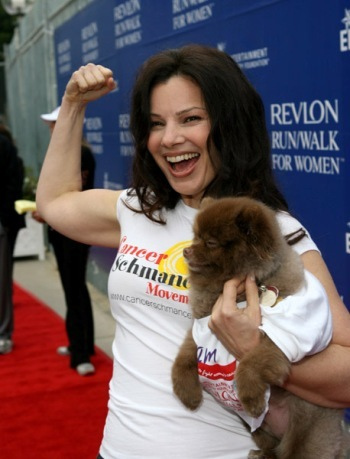
In 2000, Fran Drescher, who many remember for her role as Fran Fine on TV’s The Nanny, was finally diagnosed with uterine cancer. But it wasn’t a simple diagnosis. In fact, Fran pursued the correct diagnosis for two years, seeing eight doctors, going undiagnosed and misdiagnosed, before she knew she had a diagnosis that made sense. It’s possible that had she not pursued so many additional opinions, Fran might not be with us today. Fortunately, she was diagnosed in Stage I and was treated successfully

YES – Fran is most definitely alive, healthy, vibrant and very busy today. In fact, she has parlayed her very frightening experience into a positive for millions. She has taken a journey from misdiagnosed patient to author to motivator to global crusader.

FROM FRAN

I am a uterine cancer survivor, but was misdiagnosed and mistreated for a peri-menopausal condition I didn’t have. My doctors told me I was experiencing symptoms because of a long list of reasons – I was too young, too thin, even eating too much spinach! I was prescribed hormones to treat the symptoms, but my doctors didn’t order the proper diagnostic tests. At the time, I didn’t know to ask why or why not, because I was just happy to be told I was too young for something! But finally after an endometrial biopsy, my greatest fear was confirmed; I had cancer. It took me two years and eight doctors before finally being told I had a gynecologic cancer.

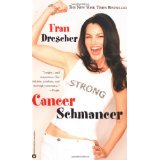
I felt betrayed not only by my own body, but by the medical community. In 2002, I wrote Cancer Schmancer, to tell my story of survival so what happened to me wouldn’t happen to others. After I went on my book tour, I realized that what happened to me had happened to so many women like me. And so it was then I realized the book was not the end but rather the beginning of a life mission to improve women’s healthcare in America. Toward this end, I have started the Cancer Schmancer Movement and Cancer Schmancer Foundation to transform women from patients into medical consumers, and to shift this nation’s priority from searching for a cancer cure towards prevention and early detection of cancer.

Take Control of Your Body

Fran Drescher – Take Control of Your Body. We need to take control of our bodies, become greater partners with our physicians and galvanize as one to let our legislators know that the collective female vote is louder and more powerful than that of the richest corporate lobbyists. As Frederick Douglass said, “Power concedes nothing without demand. It never has and it never will.”

I got famous, then I got cancer, and now I live to talk about it. Sometimes the best gifts come in the ugliest packages.  Please lock elbows with me and join the Cancer Schmancer Movement so together we can do what needs to be done, so less of us will die prematurely.

850880290

It’s time to put on your sun block and get ready for a new dawn!

Fran Drescher
President & Visionary
Cancer Schmancer Movement

Join the Movement

The following is from an interview with Fran with Trisha Torrey from About Health.

Q. Tell me about your misdiagnosis. How did you know you weren’t getting the right answers from the doctors?

A. For two years, I was bleeding 24/7 and being prescribed different treatments that did not work. I had classic uterine cancer symptoms, but those symptoms mimic so many other diseases. It was easier to treat the problem if it was benign, and that’s the kind of treatment I got, including doses of estrogen which only make uterine cancer grow. Despite the fact that the doctors and I heard hooves galloping, we were looking for horses not zebras. Did you know Anne Bancroft died of uterine cancer?

Q. Looking back, do you understand how they missed your diagnosis? Or do you feel as if they missed obvious clues?

A. I blame myself as much as those doctors. We have become infantile because we let the doctors make our decisions for us. But I’m a bit of a control freak, and I kept going to doctors, so my pursuit of the right answers was my own growth from ignorance through tenacity. I realize no one else should have power of attorney over my body.

Q. Was it necessary to undergo a more difficult treatment regimen because your diagnosis had been delayed?

A. The cure for my cancer was a radical hysterectomy. Since I was still in Stage I, I didn’t need post-operative treatment.

Q. What was your state of mind once you finally got a diagnosis that would steer you in the right treatment directions?

A. It had a huge emotional impact. I didn’t have children, and had finally fallen in love with someone I wanted to have children with. I felt like I had been betrayed by my body and the medical community. I was frightened, drew up a will, and was connecting dots that weren’t there. I thought my days were numbered. My friend Elaine reminded me that I should not mix imagination and fear because it’s a deadly cocktail.

images-1

Q. How has that experience changed the way you approach symptoms and your interface with doctors today?

A. I’ve become a medical consumer – I take nothing as gospel. I utilize the Internet, and demand a level of attention and respect. I look for certain characteristics in doctors, and if necessary, I’m quick to decide if this is not the doctor for me.

Q. After you healed from your surgery, you began writing your book, Cancer Schmancer. What made you decide to write it?

A. I needed to start taking control of an out of control situation. It was extremely cathartic. It took me four drafts before I could go from angry to funny.

Q. And then you founded your organization and movement, Cancer Schmancer. What are your goals? What do you hope people will learn?

A. When I went on my book tour, I realized the same thing had happened to millions of others — a late stage diagnosis. And those people wanted to know how they could help. I realized that there’s an army of foot soldiers – needing a Moonie! Since I was high profile story, I could be heard.

Since then I have successfully helped lobby to pass the Gynecologic Cancer Education and Awareness Act of 2005 which was signed into law by President Bush. It amends the Public Health Service Act and requires the Secretary of Health and Human Services to campaign nationally to improve the knowledge of providers and women about the early warning signs and risks involved with gynecologic cancers.

Q. And now diplomacy?

A. Yes. As a U.S. State Department diplomat, I go abroad to show that we are more female friendly, and to bring greater vision to women’s health. This is a way to expand the same message I have been bringing to American women. Stage I is the cure — that message is being heard all over the world now.

Q. What’s next for Fran Drescher? Where will your advocacy take you?

A. It’s a natural progression. I recognize that our skin is the largest organ of the body and yet what we put on our skin is an unregulated industry. Most of the products we put on our skin are filled with carcinogens! So I’m launching a 21st century model for what skin care will be. Products that won’t harm a woman, won’t harm our environment, have not harmed animals as they have been tested. Part of the proceeds will go to Cancer Schmancer.

I’m also interested in launching a new talk show to shed light on controversial issues, to talk about things I’m passionate about.

Cancer Schmancer is getting ready to send 11 “Fran Vans” into low income neighborhoods to help uninsured women to get early detection education, in an effort to bring down mortality rates from women’s cancers. The idea is to help women detect problems before they are too far along, and to provide them with education materials.

I have a big life. It’s meaningful and purposeful. I turned a negative into a positive.

…………………………………….

41c-QQ3d+lL._AA160_

Would you like to help Fran spread her message? Read Fran’s book, Cancer Schmancer.Find her blog and educational materials at her Cancer Schmancer website. You may be particularly interested in her DVD, titled “Cancer Schmancer Tea Party”.Learn more about Fran’s new skin care products, called FranBrand.

article-2747398-212AB08200000578-206_634x827

You’ve got wedding mail: Fran Drescher weds the man who invented email

Fran married Dr. Shiva Ayyadurai on September 7, 2014…Congratulations!

Read more: http://www.dailymail.co.uk/tvshowbiz/article-2747398/Fran-Drescher-weds-scientist-partner-Shiva-Ayyadurai.html#ixzz3CqqZIDZS

A Larger than Life Hero

4th

May your future life be as explosive as the fireworks and your memories
sustain your every day. Happy 4th of July…which brings me to larger than life heroes…of which there are many.

The Biggest Hero in my Life…My Dad

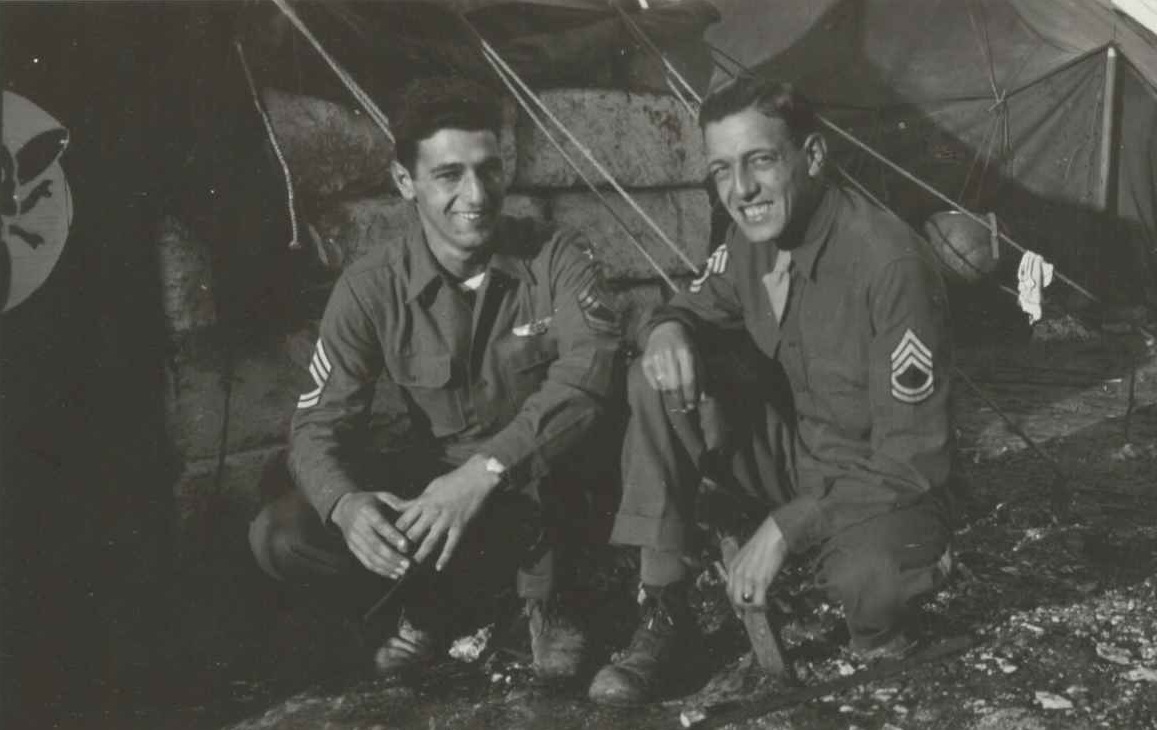
1944 25 October Lou and Tom Izzo in Italy

(left, my dad Louis J. Izzo with his brother Tom, 1944)

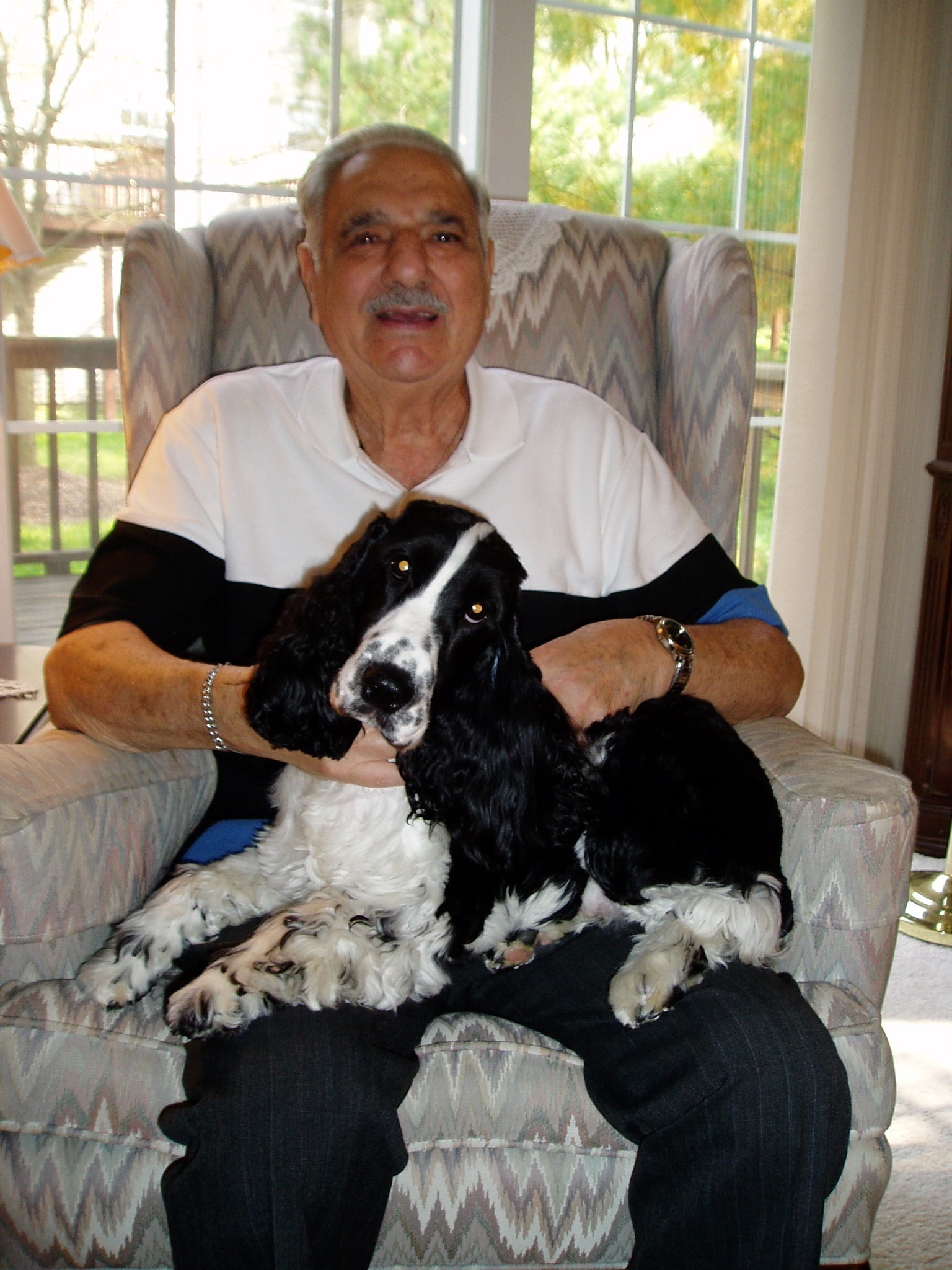
Louis J. Izzo...a quiet hero to many, a man with an unbreakable spirit died  October 30, 2009. He was 84 years young.

He was especially proud of his 30 months of service in the U.S. Air Force as an Aerial Engineer-Gunner on B-24 Consolidated Liberators (Bombers). He flew 51 missions in the European Theater of War stationed in southern Italy.

He retired from the New York City Police Department in 1972 and moved to St. Petersburg, Fl. My dad was a man of many talents and there were not many skills he couldn’t master, some of which included bricklaying, plumbing, electrical, and mostly anything he put his mind to.

He was most proud of being part of the first Diaconate Program of the Diocese of St. Petersburg which he joined in 1983. As a member of Sacred Heart Church In Pinellas Park, his ministry focused on the elderly and nursing homes.

A life well-lived life is a precious gift of hope and strength and grace from someone who has made our world a brighter, better place. Thank you Dad for always be a larger than life hero and a loving, lasting memory my grateful heart will always treasure.

OLYMPUS DIGITAL CAMERA


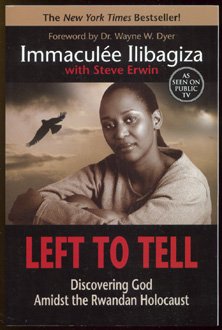
Immaculée Ilibagiza –– Left to Tell

images           

About Immaculée Ilibagiza

This is a story certainly beyond survival and a remarkable and touching journey to understanding and forgiveness.

“In 1994, Rwandan native  Immaculée Ilibagiza was 22 years old and home from college to spend Easter with her devout Catholic family when the death of Rwanda’s Hutu president sparked a three-month slaughter of nearly one million ethnic Tutsis. She survived by hiding in a Hutu pastor’s tiny bathroom with seven other starving women for 91 cramped, terrifying days. This searing firsthand account of Ilibagiza’s experience cuts two ways: her description of the evil that was perpetrated, including the brutal murders of her family members, is soul-numbingly devastating, yet the story of her unquenchable faith and connection to God throughout the ordeal uplifts and inspires. Her book, Left to Tell, is a precious addition to the literature that tries to make sense of humankind’s seemingly bottomless depravity and counterbalancing hope in an all-powerful, loving God.”
(-Publisher’s Weekly, Starred Review, March 2006)

1212700616133753

How Others Describe Her

To really know Immaculée, listen to how others describe her: “In all of my countless hours with her, in a multitude of private and public settings, this transcendentally spiritual woman always—and I mean always—shines a light that captures everyone within its boundaries,” says internationally renowned author and speaker Dr. Wayne W. Dyer. “The very first moment we met, I knew in an absolute flash of insight that I was in the presence of a uniquely Divine woman. To me, Immaculée was not only left to tell this mind-blowing story, but more than that, she’s a living example of what we can all accomplish when we go within and choose to truly live in perfect harmony with our originating Spirit.”

A stunningly beautiful woman who emanates peace and light

“Immaculée is a stunningly beautiful woman who emanates peace and light,” adds women’s wellness pioneer and best-selling author Dr. Christiane Northrup. “Her story is one that confirms the existence of power of a Divine Source. When I read her book, I came to understand and trust at a whole new level that true communion with God is possible for every one of us.”

Four years after the Rwandan tragedy, Immaculée immigrated to the United States and began working for the United Nations in New York City. She has since established the Left to Tell Charitable Fund to help others heal from the long-term effects of genocide and war.

images-1

Left to Tell has sold more than 250,000 copies worldwide, been made into a documentary, and through her Left to Tell Charitable Fund has raised over $150,000 for the orphans of Rwanda. Ms. Ilibagiza has been invited to speak to a range of audiences including dignitaries of the world, multinational corporations, churches, and local school children. The importance of her story has been recognized and honored with numerous humanitarian awards, including an honorary doctoral degree from the prestigious University of Notre Dame; the Mahatma Gandhi International Award for Reconciliation and Peace 2007; a finalist as one of Beliefnet.com’s “Most Inspiring People of the Year 2006;” and a Christopher Award, “affirming the highest values of human spirit.”Left to Tell has been chosen as Outreach Magazine’s selection for “Best Outreach Testimony/Biography Resource of 2007, and for the 2007-2008 One Book program at Villanova University making it a mandatory read for 6,000 students.

Thank you Immaculée  for your strength, your courage, your light and, for showing us how one person can make a difference!

41P9CZZpauL

“An inspirational, life-altering book. Once you turn that first page, you’re changed forever. You will never forget Immaculée and what it means to embrace life in the darkest of times.”
-Cindy Pearlman, New York Times Syndicate

“We all ask ourselves what we would do if faced with the kind of terror and loss that Immaculée Ilibagiza faced during the genocide in her country. Would we allow fear and desperation to fill us with hatred or despair? And should we survive, would our spirit be poisoned, or would we be able to rise from the ashes still encouraged to fulfill our purpose in life, still able to give and receive love? In the tradition of Viktor Frankl and Anne Frank, Immaculée is living proof that human beings can not only withstand evil, but can also find courage in crisis, and faith in the most hopeless of situations. She gives us the strength to find wisdom and grace during our own challenging times.”
-Elizabeth Lesser, co-founder of the Omega Institute, and author of Broken Open: How Difficult Times Can Help Us Grow

“Left to Tell reminds us that we are all sons and daughters of God; that with faith, miracles will always appear; and that forgiveness is the key to freedom. A must-read for all of us in these troubled times.”
-Colette Baron-Reid, the author of Remembering the Future

“Left to Tell is an incredibly important story. It addresses both the best and the worst aspects of our humanity. Immaculée is a living example of the undefeatable human spirit! Her story is timeless.”
-Steve Kalafer, three-time Academy Award–nominated producer

It’s not what happens to you. It’s what you do about it. –– W. Mitchell

WMitchellPic

Undefeatable, Unbelievable, Unforgettable, Unstoppable

W Mitchell once guided passengers up the famous hills of San Francisco, as a strong and entertaining cable-car gripman. Amazingly, the same scenario holds true today! As an award-winning keynote speaker, he now guides audiences uphill and empowers them to take responsibility for life’s inevitable challenges and to embrace the power of taking charge. As Mitchell so convincingly states, It’s not what happens to you. It’s what you do about it.

Why Mitchell? 

Mitchell was burned over 65% of his body on July 19, 1971 when a laundry truck turned in front of the motorcycle he was riding in San Francisco. His face and hands were badly scarred and his fingers were badly burned and he lost most of each of his ten fingers. He had just completed his first solo aircraft flight. He later won a $500,000 settlement in a lawsuit against Honda Inc. because the gas cap on his Honda CB750 was deemed faulty for having fallen off during the accident.

On November 11, 1975 he crashed on take off in a small aircraft he was piloting due to ice on the wings and injured his spinal cord, leaving him paralyzed from the waist down, but his other passengers escaped injury. The NTSB investigation indicated that the accident was due to his failure to detect the thin layer of ice on the wings during his pre-flight inspection.

Most Limitations are Self-Imposed

Undefeated by a blazing motorcycle accident and the paralyzing plane crash four years later, he learned to take responsibility for the countless changes in his life. Whether coping with devastating burns over 65% of his body or being sentenced to life in a wheelchair, this once robust Marine firmly held on to his feisty nature and quick wit. It was “his” uphill journey and he was determined to maintain control, cope with the changes, and prosper. Without a doubt, Mitchell understands what it takes to rebuild and eventually reach the top. His life clearly illustrates his philosophy — that most limitations are self-imposed.

Step by step, Mitchell moved forward with his life. He became an internationally acclaimed mayor “who saved a mountain”, a successful businessman who put thousands of people to work, a congressional nominee from Colorado, and a respected environmentalist and conservationist who repeatedly testified before Congress. His accomplishments have received media recognition in North America on Good Morning America, The Today Show, NBC Nightly News and their counterparts around the world. He has been a radio and television host, a successful author, an award winning international keynote speaker and the subject of a many television specials.

videoDemoMitchell

Today, as an international keynote speaker, Mitchell captivates and stuns audiences with his story and then calmly empowers them to accept challenges, embrace change and take action – not only at work but in everyday life. His tenacity and credibility are indisputable as he so obviously lives his message. No one goes away unaffected as Mitchell proves that unexpected changes can become exciting new starting points. “Before I was paralyzed there were 10,000 things I could do. Now there are 9,000. I can either dwell on the 1,000 I’ve lost or focus on the 9,000 I have left.”

If Mitchell can soar to the top, so can you!

W Mitchell shares his unforgettable story and proven strategies with corporations and associations throughout the world.  Mitchell has met with presidents and prime ministers, CEOs, managers, and workers with a message filled with warmth, good humor and wisdom.  People leave inspired and encouraged to take action regardless of the obstacle. If Mitchell can soar to the top, so can you!

(taken from the W.Mitchell website)

book