Captain Gerald Coffee, U.S. Navy (Retired) –– Beyond Survival

captain-gerald-coffee


“At some time or another, we all get shot down, are all POW’s – prisoners of ‘woe.’ Be tough, Bounce back. Don’t just survive. Go beyond survival.”


When life loses meaning

“When life loses its meaning, when suddenly the world is turned upside down, when there’s nothing left that resembles life as we’ve known it, where do we find the strength and sustenance to go on? For naval aviator Jerry Coffee and others who were held as prisoners of war in North Vietnam, there was only one choice: to go within.

Beyond Survival

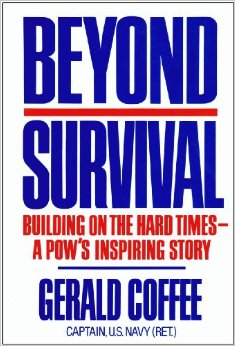
Captain Coffee’s book, Beyond Survival is a journey into the invincible human spirit that unites heart and mind in a compelling and unforgettable experience. Drawing from his seven years as a POW, Captain Coffee provides timeless lessons that apply to the physical, emotional, and ethical challenges of everyday life. Proving that leadership and creativity are possible in difficult and uncertain circumstances, Captain Coffee offers a message we can draw on in any trying situation.

Conviction must come from within

His story demonstrates that conviction must come from within, and in telling that story he touches the place inside of us where growth begins. Beyond Survival is a positive statement about love and commitment in the midst of war and division. It contrasts the cold reality of war, degradation, and torture with the warmth of human connections, inner serenity, and kinship with all of life. It poignantly illustrates that to be stripped of everything that is familiar and by which we identify ourselves leaves us with only what unites us – our human identity. It conveys truths about relationships at every level – with ourselves, with others, with our country, and with our God. Without inflaming the wounds inflicted by America’s involvement in Vietnam, Beyond Survival explores an issue at the heart of every free society: the willingness of ordinary individuals to maintain a passion for freedom so compelling that adversity strengthens rather than weakens personal resolve in the worst of circumstances. Through Gerald Coffee’s story you will discover the universal principles of survival and triumph that empower anyone to overcome adversity.

Seven Years as a POW

488389_497179280295374_1544258460_n

Sharing insights derived from his seven years as a POW in North Vietnam and his unique experiences since his release, he plants the seed of hope that we can go beyond mere survival and emerge from our adversities tougher and more capable of mastering change, achieving success, and finding greater meaning in life.

Captian Gerald Coffee is an inspiring example of the power of the human spirit to survive and triumph over the most adverse circumstances.  He tells a story of human survival, focusing on the hero inside all of us and showing how each of us can overcome the obstacles to our success.

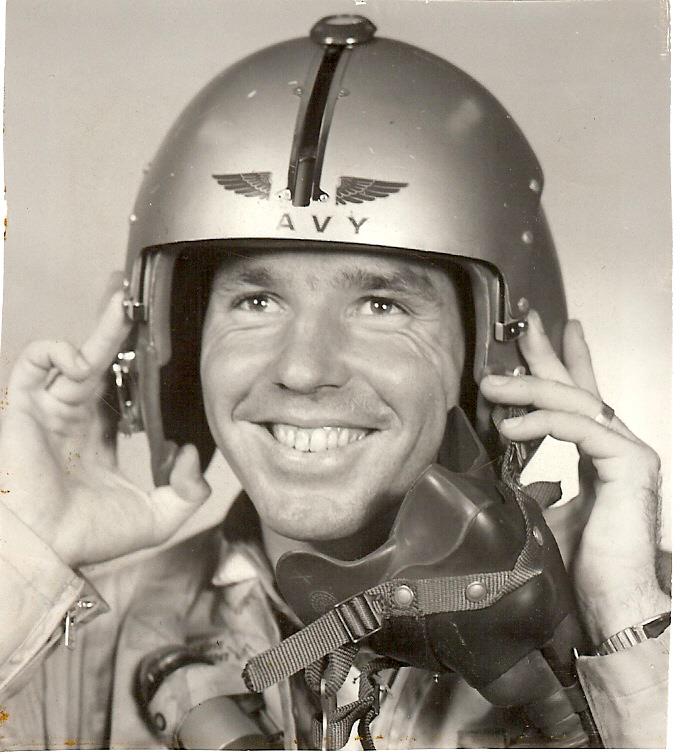
In February of 1966, while flying combat missions over North Vietnam, Gerald Coffee’s reconnaissance jet was downed by enemy fire. He parachuted safely but was captured immediately. For the next seven years he was held as a POW in the Communist prisons of North Vietnam. After his repatriation in February, 1973, Jerry returned to operation duties. He retired from active duty in the Navy after 28 years of service.

His military decorations include the Silver Star, two awards of the Legion of Merit, the Distinguished Flying Cross, two Bronze Stars, the Air Medal, two Purple Hearts, and the Vietnam Service Medal with 13 stars.

The Message of going Beyond Survival

In his message of going Beyond Survival, Jerry draws not only from insights derived from the prison experience, but also from the perspective of his experiences since  then: earning a Masters Degree in political science from Cal-Berkeley, studying at the prestigious National Defense University in Washington, D.C., Navy command and staff assignments, authoring books, writing a weekly political column, and his continuing interaction with hundreds of America’s corporations and associations, military units, civic groups and schools as a professional speaker.

From Capture to Ultimate Release

Beyond Survival, Captain Coffee gives a moving account of his incredible experience from capture to ultimate release. His faith – in himself, others, his country, and his God – was the key to turning an unbelievably difficult, potentially devastating experience into an opportunity for personal growth. Captain Gerald Coffee is an inspiring example of the power of the human spirit to survive and triumph over the most adverse circumstances. His story conveys a positive message that we each have the potential to survive any ordeal, overcome any obstacle, achieve any goal.

coffeecontactuspic

(Taken from amazon.com book description of Beyond Survival)

I had listened to an interview with Gerald Coffee and Tony Robbins many years ago. I was mesmerized by Captain Coffee’s story of survival and how he teaches us the Power of the Invincible Spirit. No matter what your challenges are, I highly recommend his book.


51BKM655uEL._SY344_BO1,204,203,200_

Amy Purdy –– Living Beyond Limits

ABC_derek_hough_amy_purdy_tk_140331_16x9_992

You are a Beacon of Light in this World

Amy Purdy went from winning a snowboarding bronze in the Sochi Paralympics to dancing the cha-cha with Derek Hough in the glitterverse 72 hours later. The whole thing is just so darn impressive, no matter how you look at it: Not only was her performance a triumph of stamina over jet lag, but it was also a triumph of dancing, considering that Amy has two prosthetic legs. “You got a bronze medal in the Olympics, you got a gold medal in the cha-cha-cha,” said Len. Bruno was “gobsmacked” by Amy’s timing, shapes and performance level. Carrie Ann gave Amy a standing ovation. “You’re more than a dancer — you are a beacon of light in this world,” she said emotionally. Total: 24.

Amy Purdy wears many hats. She is a licensed Massage Therapist, Esthetician and Makeup Artist. She also is a top professional Motivational Speaker,

Amy Purdy has lived and breathed snowboarding for most of her life, but when she lost both of her legs as a teenager and her slope-shredding days seemed over, she pushed herself to keep going. She became a world-champion adaptive snowboarder and an inspiration to others

df219de2a8e77e21b329e1c9428f085e

My Life isn’t about my Legs

“If somebody would’ve told me that I was going to lose my legs at the age of 19, I would’ve thought there’s absolutely no way I’d be able to handle that,” she told “Nightline” anchor Cynthia McFadden. “But then it happened and I realized that there’s so much more to live for, that my life isn’t about my legs.”

As a kid growing up in the Las Vegas desert, Purdy, 32, said she dreamed about snow. “I tried snowboarding at 14 and I absolutely fell in love with it,” she said. “I snowboarded every day off I had, every weekend I had off of school, every holiday we had off from school, and it became a huge part of my life, not just what I love to do, but really just kind of who I was.”

And then Suddenly, I Lost my Legs

Until one morning, 13 years ago, when Purdy said she started to feel weak — and within 24 hours was in the hospital on life support. Both of her lungs had collapsed and she says she was given only a two percent chance of survival. Doctors discovered her blood had become infected with meningitis, a form of deadly bacteria that attacks the protective membranes of the brain and spinal cord. Both of Purdy’s legs had to be amputated below the knee.

“I was in kidney failure. I ended up having a kidney transplant on my 21st birthday,” Purdy said. “I lost my spleen, I lost the hearing in my left ear, so I had a lot of internal organ damage. My legs really at the beginning were the easiest part, believe it or not.”

When she woke up from her coma, Purdy said she knew immediately she had to find a way to get back on her snowboard.

“You have to dig down pretty deep when something like this happens to you,” she said. “I mean I was just like every other girl, you know, here I had worked so hard to have a body that’s in shape and that’s healthy, and then suddenly, I lose my legs…”

Driven by Sheer Passion

Driven by sheer passion, Amy Purdy was snowboarding again just seven months after her ordeal. “When you’re passionate for something, nothing can stop you,” she said.

When Purdy started out after her recovery back in 2000, there was no prosthetic that worked for snowboarding, so she and her doctor fashioned a foot from scratch that would work on the board.

“It’s a random kind of Frankenstein foot,” Purdy said. “It’s a foot that was already built — that’s made of wood, actually, and then it was an already existing ankle joint, some of the already existing pieces that we just put together differently so that I could ride.”

Today, Purdy is a world champion, having won three World Cup gold medals in adaptive snowboarding, and she also wakeboards and skateboards.

amy-purdy-08

Amy Purdy Launched Non-Profit Clothing Line

In 2005, Purdy co-founded a non-profit company, Adaptive Action Sports, with the love of her life, boyfriend Daniel Gale, hoping to offer other physically-challenged people a chance to experience for themselves what snowboarding has meant for her.

“They see that we’re not just able-bodied saying ‘it’s going to be okay,’ they see that it’s going to be okay,” Purdy said.

One such person is 25-year-old Collin Raaz, a marine sergeant who lost both of his legs to a roadside bomb in Afghanistan just last May. He was in Crested Butte, Colo., so Purdy could teach him how to snowboard again.

He said he hopes that just like Purdy, he too will soon be tearing up the mountain again. Purdy certainly makes it look easy.

She’s even more Incredible

Her boyfriend, Daniel Gale, was awestruck from the first day he met her back in 2002. He was smitten by her looks and impressed with her snowboarding prowess. He hadn’t the vaguest clue that she had prosthetic legs.

“I think my reaction, I tried to keep it a little bit mellow so as not to be overly shocked, because at that point, there was already an attraction,” he said. “Then she pulled up the other pant leg, not that that swayed me either but it was just, I was just like wow, this is even more — she’s even more incredible.”

For Purdy, the attraction was mutual

“I was actually surprised that he was so mellow about it, because I was used to people saying, ‘Oh, my gosh, what happened?’ or ‘Whoa, I’ve never seen that,’ or, ‘Is that carbon fiber?’ or something like that, and he was so mellow, he was just like, ‘Awesome,'” she said.

Together, the couple made another dream of Purdy’s come true by bringing adaptive snowboarding to the Winter X-Games seven years ago. Their next mission is to get the sport into the Paralympics.

Amy Purdy’s incredible story and abilities have earned her wide acclaim. Madonna asked her to appear in a music video that was later shelved, Motley Crue used her in a photo shoot, and she had a prominent role in the film “What’s Bugging Seth?” And when Purdy is not busy on the snowboard, she is often skateboarding, wakeboarding or working on launching her own clothing line, Live Learn Grow.

Purdy has made a life’s purpose of sharing her message of triumph with the world through motivational speaking. She recently gave a highly-acclaimed TED talk.

“Our biggest disability is our, up here,” Purdy said, pointing to her head. “This is where we limit ourselves.”

Living Beyond Limits

“My life has not turned out as I expected — to tell you the truth it has been even more amazing. I may have lost the legs that I was born with, but these legs with carbon fiber and steel, these legs have taken me to amazing places!”

By Roxanna Sherwood and Lauren Effron, Digital Producer, via Nightline

—————————————————

I was first drawn to Amy Purdy a few years ago when I saw this picture of her in a magazine. I was mesmerized by her beauty, her confidence and her amazing ability to rise above her challenges. Thank you Amy Purdy for being such an inspiration.

115538_image_main

Please take time to view this awe-inspiring performance of Amy Purdy and Derek Hough on Dancing with the Stars: http://www.youtube.com/watch?v=6eYTlwkVeV0


Russell Brand…My Life Without Drugs

Philip-Seymour-Hoffman-Brand

I decided to post this powerful article written by Russell Brand to honor the memory of Philip Seymour Hoffman…the void we are feeling is filled with beautiful memories of his incredible acting skills. My heart and prayers are with his family and friends as we face the shock of this tragic loss.

This is a long article but, the visual imagery and message is so profound…my hope is that we help people understand the power of addiction and what it takes to conquer their inner demons. As Russell Brand says in this article, “The mentality and behaviour of drug addicts and alcoholics is wholly irrational until you understand that they are completely powerless over their addiction and unless they have structured help they have no hope.”

Please share this article with anyone you think it can help.

Russell Brand has not used drugs for 10 years. He has a job, a house, a cat, good friends. But temptation is never far away. He wants to help other addicts, but first he wants us to feel compassion for those affected.

‘I cannot accurately convey to you the efficiency of heroin in neutralising pain.’

The last time I thought about taking heroin was yesterday. I had received “an inconvenient truth” from a beautiful woman. It wasn’t about climate change – I’m not that ecologically switched on – she told me she was pregnant and it wasn’t mine.

I had to take immediate action. I put Morrissey on in my car as an external conduit for the surging melancholy, and as I wound my way through the neurotic Hollywood hills, the narrow lanes and tight bends were a material echo of the synaptic tangle where my thoughts stalled and jammed.

Morrissey, as ever, conducted a symphony, within and without and the tidal misery burgeoned. I am becoming possessed. The part of me that experienced the negative data, the self, is becoming overwhelmed, I can no longer see where I end and the pain begins. So now I have a choice.

I cannot accurately convey to you the efficiency of heroin in neutralising pain.

I cannot accurately convey to you the efficiency of heroin in neutralising pain. It transforms a tight, white fist into a gentle, brown wave. From my first inhalation 15 years ago, it fumigated my private hell and lay me down in its hazy pastures and a bathroom floor in Hackney embraced me like a womb.

This shadow is darkly cast on the retina of my soul and whenever I am dislodged from comfort my focus falls there.

It is 10 years since I used drugs or drank alcohol and my life has improved immeasurably. I have a job, a house, a cat, good friendships and generally a bright outlook.

The price of this is constant vigilance because the disease of addiction is not rational. Recently for the purposes of a documentary on this subject I reviewed some footage of myself smoking heroin that my friend had shot as part of a typically exhibitionist attempt of mine to get clean.

I sit wasted and slumped with an unacceptable haircut against a wall in another Hackney flat (Hackney is starting to seem like part of the problem) inhaling fizzy, black snakes of smack off a scrap of crumpled foil. When I saw the tape a month or so ago, what is surprising is that my reaction is not one of gratitude for the positive changes I’ve experienced but envy at witnessing an earlier version of myself unencumbered by the burden of abstinence. I sat in a suite at the Savoy hotel, in privilege, resenting the woeful ratbag I once was, who, for all his problems, had drugs. That is obviously irrational.

The mentality and behaviour of drug addicts and alcoholics is wholly irrational until you understand that they are completely powerless over their addiction and unless they have structured help they have no hope.

I have started a fund within Comic Relief, Give It Up.

This is the reason I have started a fund within Comic Relief, Give It Up. I want to raise awareness of, and money for, abstinence-based recovery. It was Kevin Cahill’s idea, he is the bloke who runs Comic Relief. He called me when he read an article I wrote after Amy Winehouse died. Her death had a powerful impact on me I suppose because it was such an obvious shock, like watching someone for hours through a telescope, seeing them advance towards you, fist extended with the intention of punching you in the face. Even though I saw it coming, it still hurt when it eventually hit me.

What was so painful about Amy’s death is that I know that there is something I could have done. I could have passed on to her the solution that was freely given to me. Don’t pick up a drink or drug, one day at a time. It sounds so simple. It actually is simple but it isn’t easy: it requires incredible support and fastidious structuring. Not to mention that the whole infrastructure of abstinence based recovery is shrouded in necessary secrecy. There are support fellowships that are easy to find and open to anyone who needs them but they eschew promotion of any kind in order to preserve the purity of their purpose, which is for people with alcoholism and addiction to help one another stay clean and sober.

Without these fellowships I would take drugs.

Without these fellowships I would take drugs. Because, even now, the condition persists. Drugs and alcohol are not my problem, reality is my problem, drugs and alcohol are my solution.

If this seems odd to you it is because you are not an alcoholic or a drug addict. You are likely one of the 90% of people who can drink and use drugs safely. I have friends who can smoke weed, swill gin, even do crack and then merrily get on with their lives. For me, this is not an option. I will relinquish all else to ride that buzz to oblivion. Even if it began as a timid glass of chardonnay on a ponce’s yacht, it would end with me necking the bottle, swimming to shore and sprinting to Bethnal Green in search of a crack house. I look to drugs and booze to fill up a hole in me; unchecked, the call of the wild is too strong. I still survey streets for signs of the subterranean escapes that used to provide my sanctuary. I still eye the shuffling subclass of junkies and dealers, invisibly gliding between doorways through the gutters. I see that dereliction can survive in opulence; the abundantly wealthy with destitution in their stare.

Spurred by Amy’s death, I’ve tried to salvage unwilling victims from the mayhem of the internal storm and I am always, always, just pulled inside myself. I have a friend so beautiful, so haunted by talent that you can barely look away from her, whose smile is such a treasure that I have often squandered my sanity for a moment in its glow. Her story is so galling that no one would condemn her for her dependency on illegal anesthesia, but now, even though her life is trying to turn around despite her, even though she has genuine opportunities for a new start, the gutter will not release its prey. The gutter is within. It is frustrating to watch. It is frustrating to love someone with this disease.

The sufferer must, of course, be a willing participant in their own recovery

A friend of mine’s brother cannot stop drinking. He gets a few months of sobriety and his inner beauty, with the obstacles of his horrible drunken behaviour pushed aside by the presence of a programme, begins to radiate. His family bask relieved, in the joy of their returned loved one, his life gathers momentum but then he somehow forgets the price of this freedom, returns to his old way of thinking, picks up a drink and Mr Hyde is back in the saddle. Once more his brother’s face is gaunt and hopeless. His family blame themselves and wonder what they could have done differently, racking their minds for a perfect sentiment; wrapped up in the perfect sentence, a magic bullet to sear right through the toxic fortress that has incarcerated the person they love and restore them to sanity. The fact is, though, that they can’t, the sufferer must, of course, be a willing participant in their own recovery. They must not pick up a drink or drug, one day at a time. Just don’t pick up, that’s all.

It is difficult to feel sympathy for these people. It is difficult to regard some bawdy drunk and see them as sick and powerless. It is difficult to suffer the selfishness of a drug addict who will lie to you and steal from you and forgive them and offer them help. Can there be any other disease that renders its victims so unappealing? Would Great Ormond Street be so attractive a cause if its beds were riddled with obnoxious little criminals that had “brought it on themselves”?

Peter Hitchens is a vocal adversary of mine on this matter. He sees this condition as a matter of choice and the culprits as criminals who should go to prison. I know how he feels. I bet I have to deal with a lot more drug addicts than he does, let’s face it. I share my brain with one, and I can tell you firsthand, they are total fucking wankers. Where I differ from Peter is in my belief that if you regard alcoholics and drug addicts not as bad people but as sick people then we can help them to get better. By we, I mean other people who have the same problem but have found a way to live drug-and-alcohol-free lives. Guided by principles and traditions a programme has been founded that has worked miracles in millions of lives. Not just the alcoholics and addicts themselves but their families, their friends and of course society as a whole.

I want you to know that the help that was available to me, the help upon which my recovery still depends is available.

What we want to do with Give It Up is popularise a compassionate perception of drunks and addicts, and provide funding for places at treatment centres where they can get clean using these principles. Then, once they are drug-and-alcohol-free, to make sure they retain contact with the support that is available to keep them clean. I know that as you read this you either identify with it yourself or are reminded of someone who you love who cannot exercise control over substances. I want you to know that the help that was available to me, the help upon which my recovery still depends is available.

I wound down the hill in an alien land, Morrissey chanted lonely mantras, the pain quickly accumulated incalculably, and I began to weave the familiar tapestry that tells an old, old story. I think of places I could score. Off Santa Monica there’s a homeless man who I know uses gear. I could find him, buy him a bag if he takes me to score.

I leave him on the corner, a couple of rocks, a couple of $20 bags pressed into my sweaty palm. I get home, I pull out the foil, neatly torn. I break the bottom off a Martell miniature. I have cigarettes, using makes me need fags. I make a pipe for the rocks with the bottle. I lay a strip of foil on the counter to chase the brown. I pause to reflect and regret that I don’t know how to fix, only smoke, feeling inferior even in the manner of my using. I see the foil scorch. I hear the crackle from which crack gets it’s name. I feel the plastic fog hit the back of my yawning throat. Eyes up. Back relaxing, the bottle drops and the greedy bliss eats my pain. There is no girl, there is no tomorrow, there is nothing but the bilious kiss of the greedy bliss.

Even as I spin this beautifully dreaded web, I am reaching for my phone. I call someone: not a doctor or a sage, not a mystic or a physician, just a bloke like me, another alcoholic, who I know knows how I feel. The phone rings and I half hope he’ll just let it ring out. It’s 4am in London. He’s asleep, he can’t hear the phone, he won’t pick up. I indicate left, heading to Santa Monica. The ringing stops, then the dry mouthed nocturnal mumble: “Hello. You all right mate?”

He picks up.

And for another day, thank God, I don’t have to.

Article written by Russell Brand, The Guardian, Friday 8 March 2013

give-it-up-logo

Gabby Giffords: Skydive is my way of saying ‘I’m alive’

Gabrielle Giffords Skydivingtdy_gabbygoals_140109.vembedmed

Gabrielle Giffords couldn’t help but see beauty as she took to the skies to mark the third anniversary of the mass shooting that left a bullet in her head and six people dead.

“Oh, wonderful sky. Gorgeous mountain. Blue skies. I like a lot,” she told TODAY’s Savannah Guthrie  in an exclusive interview about her skydiving adventure. “A lot of fun. Peaceful, so peaceful.”

I’m Alive

Gabrielle Giffords marked the three-year anniversary of an attack that left her severely wounded and forced her to resign from Congress by skydiving.

Giffords, the former House Democrat from Arizona who was gunned down with 18 others, six of them fatally, said the jump was her way to tell everyone what mattered.

“I’m alive,” she said.

You’ve Got More Spunk

Giffords, who got a pre-jump call from Vice President Joe Biden, hurtling through the air. Her pluck was noted by Vice President Joe Biden, who called Giffords just before she made the jump in the Tucson, Arizona desert. “I tell you what. You’ve got more spunk, as my mother would say, than the 10 best people I know,” he told her.

That spunk has helped her deal with severe injuries, including paralysis on much of the right side of her body, and the loss of her once eloquent speaking ability that she used passionately on the House floor. She also has dealt with memories of staff members and former constituents who lost their lives in the shooting, including a nine-year-old girl.

Tiny Triumphs and Major Milestones

Three years later, after extensive rehabilitation therapy, Giffords has been inspired by tiny triumphs and major milestones, including the small movements in her once completely paralyzed right arm.

“When Gabbie’s laying down, she can take it from here to here,” said her husband, former astronaut Mark Kelly. “But just like skydiving, gravity is working on her arm right now. And so at night, when she’s relaxed, she can move it up and down.”

That small movement was once unthinkable. But more frustrating than losing control of her body is her ability to find her words.

“Oh, awful. Oh, awful,” she said. “Hard words. So slowly. A little bit slowly. Little bit slowly.”

But that hasn’t stopped her from achieving ambitious goals she has set for herself.

“Spanish,” said the once-fluent Giffords with a laugh. “Yeah, Spanish. Fluent. Fluent.”

She also has another objective: “The French horn.”

Giffords wants her Voice Heard in Every Possible Way

That’s because three years after the tragedy that nearly killed her, Giffords wants her voice heard in every way possible. Last year, she traveled the country and headed back to Congress to push for enhanced background checks for gun owners. She believes the heightened effort might help curb senseless shootings like the one that nearly cost her life.

Giffords said she was discouraged by the lack of progress on gun control legislation in Congress.

“So sad. So awful,” she said. “The worst … Congress. The worst.”

Those who know Giffords say her desire to take a skydiving trip didn’t surprise them. Her friend and former Navy Seal Jimmy Hatch was her tandem partner for her first plane jump in 2009. He said skydiving is a way for Giffords to express through actions what has become difficult to express in words.

“I think her spirit is incredible and that you can see it, in spite of the way she can communicate now, and I think it’s a limitation on us that we can’t really grasp it,” he said. “It’s not really her limitation.”

She’s Always Been Fearless

Her mother, Gloria Giffords, said her daughter always has been fearless.“Ever since she was a little kid. I mean this is a child that got on a horse and jumped over jumps, you know. Climbed up and down the Grand Canyon,” she said.

Back home in Tucson, Giffords continues with her therapy. These days, recovering is her full-time job. Asked whether she wants to return to office one day, Giffords said that’s an issue to consider in the future. “A little bit later. Little bit later,” she said. “Maybe. Maybe.”

But her outlook continues to improve and optimism abounds.

“Pretty good,” she said, even singing a song illustrating her attitude.

“The sun’ll come out tomorrow….”

Written by Eun Kyung Kim from The TODAY Show, Interview by Savannah Guthrie of The TODAY Show

Gabrielle Giffords and Mark Kelly’s story is a reminder of the power of true grit, the patience needed to navigate unimaginable obstacles, and the transcendence of love. Gabrielle Giffords is an incredible example of the Power of an Unbreakable Spirit.

As my good friend Dr. Gary Heller says, “if you fail, you do it again, if you fail, you do it again, if you fail you do it again until, you succeed!  No matter what our challenges are…the mantra is “Never Give Up.” Thank you Gabrielle Giffords for demonstrating, it’s not what happens, it’s what we do about that shapes our future. You are a hero and a true inspiration to us all.  Read more about Gabrielle Giffords and Mark Kelly in their book, Gabby: A Story of Courage, Love and Resilience.

418x5ufrdnl-_bo2204203200_pisitb-sticker-arrow-clicktopright35-76_aa278_pikin4bottomright-6522_aa300_sh20_ou01_-e1389728742738

About

Marie_Izzo            

Marie Francesca IzzoI am 66 years young and sometimes I feel like I am walking in mud struggling to get out before it turns to cement. I have been through many chapters in my life and the thought of starting over…well, it is frightening, exhausting and causes me to run right back to my cocoon.

On the other hand, I need, we all need, a rejuvenation at times, a redefinition of who we are and where we are going. Sometimes, we just want to press the reset button.

I am not a psychologist, I am not a writer…what I am, is someone who is fascinated with the human spirit. Why is it that some people can rise above their challenges and make something of themselves, while others, not only can’t rise above their challenges, instead, they plummet into a seemingly bottomless chasm.

My inspiration for this blog was my husband, Bruce B. Blackburn III. He was a person who made a difference in this world. He overcame extreme medical challenges and shifted his focus from illness to wellness. He went from being a hospice patient at age 38 –– to living another 14 years…defying every doctor and their prognosis. He shared his passion, enthusiasm and compassion with everyone he met. His story symbolizes hope, courage and a knowing that no matter what our challenges are to never give up.

This blog is about winning from within and the power of the unbreakable spirit. It is a collection of stories of people from all walks of life who faced their challenges head on and rose above them…It’s not what happens, it’s what we do about it that shapes our future.

Together, let’s set the reset button again and see where it takes us…

Jan Keith Lipes, M.D. –– Reflective Impressionism

Jan Lipes

Jan Lipes looked to his past to reshape his future.
by Bruce B. Blackburn III

“As much as water or food, people need art to survive,” declares New Hope, PA artist Jan Lipes of the importance of art in our lives. “That’s held true in my own case. It really is my reason for being here. Without it, I don’t see any other way to interact with the globe. It’s what I do—what I need to do.”
Passion such as this helps define the artist, who describes his paintings as “epiphanies,” which he says are inspired by life’s everyday scenes. Soft-spoken and gracious, Jan projects the air of a thoughtful individual who is serious about his work and determinedly pursuing his role as artist. Art, in fact, has been his salvation. You see, Jan never planned to paint, and how he became an artist is a one-of-a-kind, inspiring tale.                      Doing the Right Thing
Born and raised in Bronx, NY, the sixty-two year-old artist spent his student years preparing for medical school. After high school he earned a degree in Literature from City College and an M.D. from the Albert Einstein College of Medicine, both in New York. In 1981, he and his wife, Janet, moved to Solebury, PA where a position as emergency department physician awaited him at nearby Doylestown Hospital. He fell irrevocably in love with the Bucks County countryside, and he loved practicing medicine. “When I went into medicine there was never any question about it,” he recalls. “I thought: I’m going to be a healer and that’s a good thing to do. I wasn’t tortured about the validity of my life’s work, I had no doubts about what I was doing.”
In his early thirties, Jan was diagnosed with multiple sclerosis, and the disease took its toll as time passed, so that by 1993 he could no longer handle the physical demands of his job. He left the hospital confined to a wheelchair. His sons were young and he was determined to be an involved father. He wondered—How will I manage?  What can I do that gives my life meaning?
What can I do that gives my life meaning?                                                                 The answers came by looking to his past. “I asked myself what stirred me the most other than medicine,” he says.“Before I disappeared into the bowels of the hospital for twenty years and lost touch with my art side, I was constantly doodling,” he explains. The pages of his school notebooks were laced with drawings. Even as a physician, he was always pulled toward art. He sketched in pen and ink, took pottery lessons in Manhattan, had drawing sessions with his children, learned black-and-white photography and did his own darkroom work. “Art was always surfacing.” he says.
Once Jan made up his mind, he began another journey entirely: he would learn how to paint. As surely as he’d known without reservation that medicine had once been the perfect career choice, he knew that being an artist would be equally fulfilling.
Fine Tuning
“It was trial and error,” he says. I picked up a brush and started doing it. I pushed paints around on the palette and eventually started to get somewhere.” Having lost the use of his dominant right hand, he worked to fine-tune his left hand’s coordination. Immediately he loaded up his palette with far too many paints. His motor skills improved, but more elusive was figuring out what colors he would use for his personal palette. “I did a brutal surgery on my palette and brought the number of colors down to five or six. I’m still using those same basic colors.”
Along with architecture, riverscapes and canal views, landscapes are Jan’s primary subjects, which he paints in the style of the New Hope Impressionists before him. There is an ordered, well-balanced aspect to his compositions. Similar to the writer whose every word is carefully chosen to enhance his story, every brush stoke Jan employs is essential to his canvas. Colors are vibrant, by turns tonalist and Fauvist, and his paintings often contain mirror-like reflections off the canal and river he so likes to portray.
A Contemplative Journey
His airy, light-filled studio looks out on a spacious yard lush with mature landscaping—a view that inspires peaceful rumination.
Jan once painted plein air, and Janet made it possible. “She carried my easel, toolbox, canvases—everything!—and set me up in these out-of-the-way places so I could paint. She was taking care of two adopted kids as well as our own.” There were also other distractions, and his technique required uninterrupted attention; his home studio offered refuge. “Janet served as a great inspiration to me. She was my best critic critic and provided me all around support. Without her help, I would have never have accomplished what I’ve accomplished,” he insists.
“I’m not a quick painter, I’m slow and deliberate, my paintings take a long time to do,” he says. “They evolve. I see things emerge. It’s a whole process, a contemplative journey.” To judge by viewer reaction to his painting, the artist has found sure footing on his new life path.
Jan’s paintings have captivated many fans, accumulated numerous awards, and been exhibited at art shows and galleries throughout the region. His refreshing perspective of the New Hope-Lambertville Bridge, Free Bridge Sister Towns, became the poster and auction painting for the 2002 Lambertville-New Hope Winter Arts Festival, and he is featured/cover artist for the Area Guide to Bucks and Hunterdon Counties 33rd edition, 2002-2003. He is represented in Philadelphia by Newman Gallery and in New Hope by Gratz Gallery & Conservation Studio. He also had a weekly column on art for the Bucks County Herald.
“As I’m working, my focus is entirely on each painting and completing it. After that, like children, they’re on their own, launched into the world. It’s thrilling to think about where they’re going to go!” Like collectors of fine antiques, he subscribes to the concept that we play a caretaker role when it comes to fine objects; that antiques and art enrich our lives for a finite time until passed on to another appreciative custodian.
Recycling the World
Driven to create art, Jan says “I have a tremendous compulsion to paint. It must come out, I can’t just keep it in, it’s got to be recycled.” That’s how he sees what he’s doing: recycling the world around him into another form—his paintings.
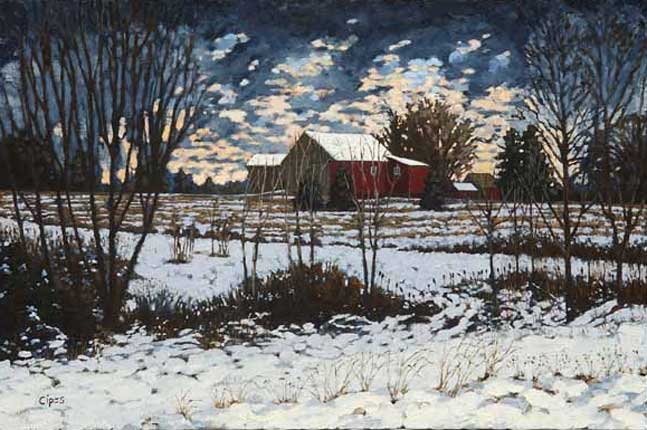
“People say I’m inspirational, but I’m nothing special. Everybody has their challenges. My struggles are like other peoples’ struggles,” he observes. “Some have more, others fewer.” Ever expanding his scope, Jan just last year began painting night scenes and incorporating snow into his repertoire. Whatever else life holds, he has discovered, the learning goes on forever.

###

Jan Lipes has never let his illness define him…in fact, he is the definition of the Power of an Unbreakable Spirit. He did not resign to his challenges…he faced them head on, rose above them and, used them as a platform to redefine who his is. To learn more about     Jan Lipes and see more of his artwork, go to: janlipes.com

Sunset Lambertville 630x430

         Sunset Lambertville 630 x 430

Apres le Deluge 647x430

           Apres le Deluge 647 x 430

Go back

Your message has been sent

Warning
Warning
Warning
Warning

Warning.

Malala Yousafzai…Unbreakable!

gty_malala_yousafzai_quote_ll_131004_wmain

GLOBAL SYMBOL OF AN UNBREAKABLE SPIRIT

Malala Yousafzai is a global symbol of an “Unbreakable Spirit,” A year ago this week 15-year-old Malala Yousafzai was brutally attacked on her way home from school — shot in the head at point-blank range by the Taliban.

One year later, the shot heard round the world has given birth to a movement of change — a movement to educate girls, and the little girl from Swat Valley in Pakistan has become an international symbol of courage and hope.

“In some parts of the world, students are going to school every day. It’s their normal life,” Malala told Diane Sawyer in an exclusive interview for ABC News. “But in other parts of the world, we are starving for education … it’s like a precious gift. It’s like a diamond.” A diamond she was willing to risk her life for.

Malala was named for a famous Afghan woman warrior and when the Taliban issued an edict banning all girls from going to school, she spoke up when no one else would. She blogged about the Taliban attacks on schools for the BBC, and even appeared in a New York Times documentary, saying defiantly: “They cannot stop me. I will get my education — if it is in home, school, or anyplace.”

Even though she knew there had been threats made against her, she says she never expected the Taliban to harm a young girl. But she did rehearse in her own mind what she would do if attacked.

EDUCATION IS IMPORTANT

“It was always my desire before the attack that if a man comes … I would tell that man that education is very important,” Malala told Sawyer. “I will tell that man that I even want education for your daughter.”

“And you think that would work against a gun?” Sawyer asked. “I thought that words and books and pens are more powerful than guns,” Malala answered.

And on Oct. 9, 2012 as she and her friends were singing on the way home, playing the sides of her school bus like a drum, she never imagined that the young man who boarded the bus and asked “Who is Malala?” was an assassin sent by the Taliban to kill her.

“On the day when I was shot, all of my friends’ faces were covered, except mine,” Malala said. “It was brave, but was it wise?” Sawyer asked Malala. Malala answered: “At that time, I was not worried about myself. I wanted to live my life as I want. ”

She doesn’t remember the man pointing his Colt .45 and firing three bullets at point blank range. Bleeding heavily, unconscious, Malala was rushed to a local clinic, then to a hospital where a military surgeon saved her life by removing part of her skull as her brain began to swell. She was transported to a military hospital, and then days later airlifted to England. She calls it her “seven days of coma dreams.”

AM I DEAD OR AM I ALIVE

“At the time, I was — thinking that am I dead or am I alive?” Malala said. “If I am dead, I shall be — in a graveyard. But then I said, you are not dead. You can talk to yourself. How can you be dead? Then I said, ‘You are alive.’… just hope. One day you will wake up.”

Today, after numerous surgeries and intensive physiotherapy, Malala is attending school in Birmingham, England, and says she is “totally recovered.” She says she loves music, drama and physics — and remains extremely competitive.

“Do you know how close you came to death?” Sawyer asked. “I think death didn’t want to kill me. And God was with me,” Malala said. “And the people prayed for me… And now, I know that you must not be afraid of death. And you must move forward. You must go forward, because education and peace is very important.”

Malala’s miraculous recovery has taken her on an extraordinary journey from a remote valley in northern Pakistan to the halls of the United Nations in New York. At sixteen, she has become an international symbol of peaceful protest and the youngest nominee ever for the Nobel Peace Prize.

I AM MALALA

Malala’s story just came out in a book this week entitled, “I am Malala.” It will make you believe in the power of one person’s voice to inspire change in the world.

I am MalalaI AM MALALA is the remarkable tale of a family uprooted by global terrorism, of the fight for girls’ education, of a father who, himself a school owner, championed and encouraged his daughter to write and attend school, and of brave parents who have a fierce love for their daughter in a society that prizes sons.

Don’t miss a special primetime hour on Malala, “Unbreakable,” airing on “20/20,”October 11th at 10 p.m. ET.

(Excerpts were taken written by Teri Whitcraft and Muriel Pearson from ABC News via World News.)

Tony Bennett…It’s the Good Life. Was it Always??

fb_img   images

TONY BENNETT NEEDS NO INTRODUCTION

Tony Bennett needs no introduction. He may have left his heart in San Francisco, his signature song, but this legend is global and bridges the generation gap. He has had a non-stop journey of accomplishments and at 87, he recently completed “Duets: An American Classic”  CD with such luminaries as Lady GaGa, Mariah Carey, Andrea Bocelli, Josh Groban to name a few, that has sold more copies than any album in his career. He is the oldest Number One Performer.

We would all aspire to be like Tony Bennett…a consummate artist and performer whose unpretentious style and consistent pursuit of excellence has led to his success.

One would think he has always led a charmed life. Yet, there was a time in his career where he had a change in fortune.

IN 1964

In 1964, with the competition of the Beatles and the influx of Rock and Roll, he was struggling with the change in the public’s taste in music. His singing career took a downturn and he left Columbia Records. He began using cocaine and marijuana, he separated from his first wife and, his debts grew to the point of bankruptcy with the IRS trying to seize his home in LA. I don’t know about you, but I was shocked to hear this but, impressed that the power of an unbreakable spirit led him to overcome his challenges.

A near death experience, passing out in a bath tub, scared Bennett into changing his habits. In this defining moment in his life most people would have landed in an abyss never to be heard from again.

TONY’S STRONG INNER DYNAMICS

Tony’s strong inner dynamics and resilience rejuvenated his career. How you may say? What he was doing wasn’t working and he figured out another way. He brought back his original style, he hired his son Danny as his manager and, he went back to Columbia Records. Tony staged a strong comeback and has been moving the hearts and souls of his audience ever since.

Tony Bennett said recently, “I will never retire, I will keep performing because I love it.”

And we love you Tony Bennett…thank you for your inspiration and teaching us that life will have detours and…it’s not what happens, it’s what we do about it that shapes our destiny.

###

$T2eC16h,!)cE9s4Pvm2PBQ05uKQIrQ~~60_35

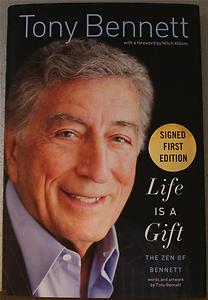
Tony Bennett’s latest book “Life is a Gift” is a moving and inspiring memoir from one of the greatest musical artists of all time.” His given name is Anthony Dominick Benedetto, and Benedetto in Italian means ‘the blessed one.’ I think you will agree, we have been blessed.

Robin Roberts…Don’t Quit, Don’t Give In!

Image

Turning Mess into Message

Good Morning America (GMA) anchor Robin Roberts was honored for “Turning Mess Into Message” The 2013 recipient of the Arthur Ashe Courage Award at this year’s ESPYs, Robin said, “I feel that I am a symbol of all those who have gone past their struggles in life and come up on the other end as a thriver as well as a survivor.”

Robin’s Journey

In August 2005, Roberts found her personal and professional lives collide when Hurricane Katrina devastated the city of New Orleans and Mississippi Gulf Coast where Roberts called home most of her life.

In 2007, Robin fought and won a courageous and public battle with breast cancer.

In 2012, Robin discovered she had myelodsplastic syndromes, known as MDS, a rare and debilitating blood disorder, most likely resulting from her treatment for breast cancer. She underwent a bone-marrow transplant in September 2012. She was warned that “at one point I would feel like dying.” Shortly after the transplant, that came true, she said: “I was in a pain I had never experienced before, physically and mentally. I was in a comalike state. I truly felt like I was slipping away. Then I kept hearing, ‘Robin! Robin’” The voice belonged to a nurse, who was “pleading for me to stay here,” Ms. Roberts said. “And thankfully I did. I came back.”

Don’t Quit, Don’t Give in

Thank you Robin Roberts for being such an inspiration and allowing us to share your journey, survival and comeback to Good Morning America. You taught us all that no matter what our challenges are to…Don’t Quit, Don’t Give in.

Please take a few minutes and watch Robin in Mandisa’s Overcomer video.

This video is awesome and showcases not only the Power of Unbreakable Spirits but, Overcomers message for all of us…Don’t Quit, Don’t Give in!!

http://gma.yahoo.com/video/mandisas-overcomer-music-video-world-124400300.html

WELCOME BACK ROBIN!

good-morning-america

Our Story

Bruce B. Blackburn III

Bruce B. Blackburn III

I wanted to share my story with you. My husband, Bruce B. Blackburn III passed away in December, 2005 at the age of 52. Bruce was an incredible writer, editor (and husband)––a romantic soul who lived life on a more emotionally enriching plane and his link between the written word and love is undeniable.

Bruce had a couple of books in him which he never got to publish.  After his death, I was compelled to do a commemorative book for him entitled, A Bucks County State of Mind…in his words. The purpose of this book is a legacy to Bruce and the people he profiled. This book includes 40 profiles of people he wrote about in a ten-year period as Senior Editor of Nouveau Magazine in New Hope, PA. I chose the profiles of those I feel touched his heart, just as he touched theirs. Our Story was written in 1994. Bruce lived another 11 years and he turned his greatest challenge into a gift.

Our Story (written by Bruce B. Blackburn III)
Marie and I have a story to tell. Like storytellers of old, she’s told it to a lot of people already. Sometimes just in passing conversation, other times because she felt it could help someone facing a difficult personal challenge. It’s that kind of story.

Profound Message
Our story has a profound message. Reaction to it is inevitably intense and emotional. For a while now Marie has urged me to write it down—not only because it is an intriguing account, but because she is convinced people will take away from it insights and lessons in living happier, more fulfilling lives, whatever their age and regardless of their relationships, financial status or health.

We met at an exciting time in our lives at the University of South Florida in Tampa, FL. I walked into my first photo lab class and was immediately captivated by the attractive, dark-haired laboratory assistant in her white lab coat. Before long, we discovered our friendship was magnetic, and we developed a bond that was irrevocable. The year was 1973.

After graduation, caught up in seedling career pursuits, we traveled separate paths. In the late 1980s, my health dramatically declined. Chronic congenital asthma had me on high doses of steroids since the age of fifteen, and side effects were taking their toll. Significant problems with my lungs, heart, bones and circulation, plus chronic pain and multiple drug interactions, had worn me down. I was weak, on 30 medications a day, unable to work, alone and nearly bedridden at home in Vienna, VA.  Hopeless, bankrupt, deserted and in despair, I had given up.

The Visit
Upon learning of my condition, Marie actively reentered my life. She regularly called from Florida and sent me books and tapes on positive thinking, love and healing, but they seemed to have little effect. I was slipping away. My status plummeted to terminal. I was in the hospital near death when she summoned all her courage and decided to visit me on my thirty-eighth birthday, May 23rd, 1991.

The visit proved to be a turning point in both our lives. From then on a love stronger than we believed could happen—richer and more miraculous than we’d ever imagined possible suffused our lives and permeated our days. Marie soon returned to Florida, and our newly discovered love filled my heart with hope. The energy it created spurred an attitude shift that empowered me to fight for my health and our life together.

After ten months in the hospital, I was taken by air ambulance to a nursing home in Florida. Marie met me there. Hospice placed me on its roster and visited regularly. So did Marie. Between the nursing home and Marie, I existed between purgatory and paradise.  Being there was my worst nightmare, but Marie came every day, often for hours. She stood my ground for me when I could not. She so steadfastly refused to accept losing me that I began to wonder if I just might be worth saving. I decided I must be; I decided to fight.

Mirror-Image Reversal
In an upbeat, mirror-image reversal of my descent toward doom, Marie nurtured me back from the abyss. I began making progress, gaining control. Hospice graciously withdrew its services and wished me the best, which I already knew I had found.

Today, our goals are unified: to be happy and healthy, achieve professional success, to help others embrace a positive attitude toward living and wellness, and to remain together, always and forever.

###

An interview with Bruce Blackburn was like talking to your best friend. This insightful, brilliant man got you to reveal your soul and then when you read what he wrote, you realized he captured your essence in a comfortable way that connected you to him forever.

A Bucks County State of Mind…in his words contains 40 profiles, over 150 pictures, 208 pages in a 9 x 9 format with the cover featuring a painting of Bruce by Bucks County’s renowned artist Robert A. Beck.  You can order the book on amazon.com.  Please visit our website: abuckscountystateofmind.com.

“One thing I know for sure is that Bruce not only make a difference in this world, but, the world is a better place because of him.  He was a true hero!”

BCSM cover